PG Regular Semester-III Examination 2025 Question Paper, Patliputra University, Patna
PG Regular Semester-III Examination 2025
Patliputra University, Patna

(Session: 2024-26)
GEOGRAPHY
Paper Code: 920710
(Quantitative Techniques & Research Methodology)
Time: Three Hours] [Maximum Marks : 70
Note : Candidates are required to give their answers in their own words as far as practicable. The figures in the margin indicate full marks. Answer all the parts as directed.
अभ्यर्थी यथासंभव उत्तर अपने शब्दों में ही दें। उपांत के अंक पूर्णांक के द्योतक हैं। निर्देशानुसार सभी भागों से प्रश्नों के उत्तर दीजिए।
PART-A / भाग-अ
(Objective Type Questions)
(वस्तुनिष्ठ प्रश्न)
Note: Attempt all MCQ from this part. Each question carries 2 marks. [10×2=20]
इस भाग से सभी बहुविकल्पीय प्रश्नों के उत्तर दीजिए। प्रत्येक प्रश्न 2 अंकों का है।
1. (i) Quantitative methods in Geography primarily aim to:
(a) Describe landscapes
(b) Quantify spatial patterns
(c) Study myths
(d) Draw maps
भूगोल में मात्रात्मक विधियों का मुख्य उद्देश्य है:
(a) परिदृश्य का वर्णन करना
(b) स्थानिक प्रतिरूपों को परिमाणित करना
(c) मिथकों का अध्ययन करना
(d) मानचित्र बनाना
(ii) A review of literature helps a Researcher to:
(a) Avoid plagiarism
(b) Define problem precisely
(c) Collect samples
(d) Conduct interviews
साहित्य समीक्षण शोधकर्ता की सहायता करता है:
(a) साहित्यिक चोरी से बचने में
(b) समस्या को सटीक परिभाषित करने में
(c) नमूने एकत्र करने में
(d) साक्षात्कार करने में
(iii) The main difference between a Questionnaire and a Schedule is:
(a) number of questions
(b) field is investigator involvement
(c) method of tabulation
(d) use of diagrams
प्रश्नावली और अनुसूची के बीच मुख्य अन्तर है:
(a) प्रश्नों की संख्या
(b) क्षेत्र अन्वेषक की भागीदारी
(c) सारणीकरण की विधि
(d) आरेखों का प्रयोग
ANOVA (Analysis of Variance) isused to test differences between:
(a) Two variables
(b) Several group means
(c) Time periods
(d) Hypotheses only
एनोवा (विविधता विश्लेषण) का उपयोग किया जाता है:
(a) दो चरों के बीच अंतर जाँचने के लिए
(b) कई समूह माध्यों के बीच अंतर जाँचने के लिए
(c) समय अवधियों के अध्ययन हेतु
(d) केवल परिकल्पनाओं हेतु
(v) The Gravity Potential Model in Geography explain:
(a) Population growth
(b) Spatial Interaction between Places
(c) Weather changes
(d) Migration causes only
भूगोल में गुरुत्वाकर्षण संभाव्य मॉडल समझाता है :
(a) जनसंख्या वृद्धि
(b) स्थलों के बीच स्थानिक अंतःक्रिया
(c) मौसम परिवर्तन
(d) केवल प्रवासन के कारण
(vi) Correlation Coefficient measures:
(a) Causation
(b) Degree of relationship between Variables
(c) Central tendency
(d) Variation within Sample
सह सम्बन्ध गुणांक मापता है:
(a) कारणता
(b) चरों के बीच सम्बन्ध की मात्रा
(c) केन्द्रीय प्रवृत्ति
(d) नमूने के भीतर अन्तर
(vii) Random Sampling ensures that:
(a) All items have equal chance of selection
(b) Large areas are avoided
(c) Data become biased
(d) Samples are small
यादृच्छिक नमूना यह सुनिश्चित करता है कि:
(a) सभी इकाइयों को समान रूप से चुने जाने का अवसर मिले
(b) बड़े क्षेत्र टाले जाएं
(c) आंकड़े पक्षपाती हों
(d) नमूने छोटे हों
(vii) Which of the following tools is used for Primary data collection?
(a) Questionnaire
(b) Gazatteer
(c) Statistical yearbook
(d) Atlas
प्राथमिक आंकड़े एकत्र करने का कौन-सा उपकरण है?
(a) प्रश्नावली
(b) राजपत्र
(c) सांख्यिकीय वर्षपुस्तक
(d) मानचित्र
(ix) Which of the following is a type of research based on existing data?
(a) Field research
(b) Experimental research
(c) Historical research
(d) Descriptive researchनिम्नलिखितमें से कौन-सा अनुसंधान मौजूदा आंकड़ों पर आधारित होता है?
(a) क्षेत्रीय अनुसंधान
(b) प्रयोगात्मक अनुसंधान
(c) ऐतिहासिक अनुसंधान
(d) वर्णनात्मक अनुसंधान
(x) A hypothesis is:
(a) A statement of fact
(b) An untested proposition
(c) Aproven law
(d) A data collection method
परिकल्पना है:
(a) तथ्य का कथन
(b) अपरीक्षित प्रस्तावना
(c) सिद्ध नियम
(d) डाटा संग्रह की विधि
PART-B / भाग-ब
(Short Answer Type Questions)
(लघु उत्तरीय प्रश्न)
Note : Answer any four questions. Each question carries 5 marks. [4×5=20]
निम्नलिखित में से किन्हीं चार प्रश्नों के उत्तर दीजिए। प्रत्येक प्रश्न 5 अंकों का है।
2. Explain the significance of quantitative methods in geographical research.
भौगोलिक अनुसंधान में मात्रात्मक विधियों के महत्व की व्याख्या कीजिए।
3. Describe the essential elements of a good research design.
एक अच्छे अनुसंधान रूपरेखा के आवश्यक घटकों का वर्णन कीजिए।
4. Differentiate between a Questionnaire and a Schedule with suitable examples.
प्रश्नावली और अनुसूची में उपयुक्त उदाहरणों सहित अन्तर स्पष्ट कीजिए।
5. What are the main steps involved in Hypothesis formulation and Testing?
परिकल्पना के निर्माण और परीक्षण में सम्मिलित प्रमुख चरण कौन-कौन से हैं?
6. Explain the concept and utility of gravity and population potential models in human geography.
मानव भूगोल में गुरुत्वाकर्षण तथा जनसंख्या संभाव्य मॉडल की संकल्पना और उपयोगिता की व्याख्या कीजिए।
PART-C/ भाग-स
(Long Answer Type Questions)
(दीर्घ उत्तरीय प्रश्न)
Note: Answer any three questions. Each question carries 10 marks. [10×3=30]
निम्नलिखित में से किन्हीं तीन प्रश्नों के उत्तर दीजिए। प्रत्येक प्रश्न 10 अंकों का है।
7. What is a review of Literature? Explain its purpose, structure and relevance in the process of geographical research.
साहित्य समीक्षण क्या है? भौगोलिक अनुसंधान प्रक्रिया में इसके उद्देश्य, संरचना तथा प्रासंगिकता की व्याख्या कीजिए।
8. Discuss the assumptions, merits and limitations of the Chi-square test in Geographical research. Ilustrate with an example from population geography.
भौगोलिक अनुसंधान में काई स्क्वायर परीक्षण की मान्यताओं, गुणों तथा सीमाओं पर चर्चा कीजिए। जनसंख्या भूगोल से एक उदाहरण सहित स्पष्ट कीजिए।
9. Discuss the theoretical basis, formulation and geographical applications of the Gravity Potential Model and the Population Potential Model.
गुरुत्वाकर्षण संभाव्य मॉडल तथा जनसंख्या संभाव्य मॉडल के सैद्धान्तिक आधार, निर्माण प्रक्रिया एवं भौगोलिक अनुप्रयोगों पर चर्चा कीजिए।
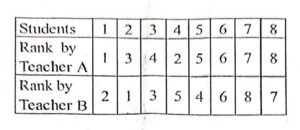
10. Given the following ranks assigned by two geography teachers to eight students in a fieldwork project, compute the Spearman’s rank correlation coefficient between the teacher’s judgments. Calculate all steps, show the formula and interpret the result:
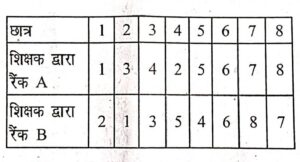
नीचे दी गई तालिका में आठ छात्रों को दो भूगोल शिक्षकों द्वारा दी गई रैंकिंग दर्शाई गई है। स्पीयरमैन के रैंक सहसम्बन्ध गुणांक की गणना कीजिए और परिणाम की व्याख्या कीजिए। सभी चरणों की गणना कीजिए, सूत्र दिखाइए और परिणाम की व्याख्या कीजिए:
11. Discuss the concept, assumptions and methodology of Analysis of Variance (ANOVA).
विचरण विश्लेषण (एनोवा) की अवधारणा, मान्यताओं और कार्यप्रणाली पर चर्चा कीजिए।
PG (Regular) (Sem.-III)
Examination, 2025
(Session : 2024-26)
GEOGRAPHY
Paper Code: 920711
(Remote Sensing and Geographical Information System)
Time: Three Hours] [Maximum Marks: 70
Note: Candidates are required to give their answers in their own words as far as practicable. The figures in the margin indicate full marks. Answer all the parts as directed.
अभ्यर्थी यथासंभव अपने शब्दों में ही उत्तर दें। उपांत के अंक पूर्णांक के द्योतक हैं। निर्देशानुसार सभी भागों से प्रश्नों के उत्तर दीजिए।
PART-A / भाग-अ
(Objective Type Questions)
(वस्तुनिष्ठ प्रश्न)
Note: Attempt all questions. Each question carries 2 marks. [10×2=20]
सभी प्रश्नों के उत्तर दीजिए। प्रत्येक प्रश्न 2 अंकों का है।
1. (i) In which year was the first Indian Remote Sensing Satellite launched?
(a) 1975
(b) 1988
(c) 1980
(d) 1995
भारत का पहला रिमोट सेंसिंग उपग्रह किस वर्ष प्रक्षेपित हुआ था?
(a) 1975
(b) 1988
(c) 1980
(d) 1995
(ii) Which of the following is a Remote Sensing Satellite?
(a) INSAT-3D
(b) IRS-1A
(c) Aryabhata
(d) Bhaskara-1
निम्नलिखित में से कौन एक रिमोट सेंसिंग उपग्रह है?
(a) INSAT-3D
(b) IRS-1A
(c) आर्यभट्ट
(d) भास्कर-1
(iii) Which plate form is used for Remote Sensing?
(a) Ground Station
(b) Aircraft and Satellite
(c) River boat
(d) Only Balloon
रिमोट सेंसिंग के लिए कौन-सा प्लेटफॉर्म उपयोग किया जाता है?
(a) भूमिगत केन्द्र
(b) विमान और उपग्रह
(c) नदी की नाव
(d) केवल गुब्बारा
(iv) Which component is not part of GIS?
(a) Hardware
(b) Software
(c) People
(d) Rocket
कौन-सा घटक जी.आई.एस. का हिस्सा नहीं है?
(a) हार्डवेयर
(b) सॉफ्टवेयर
(c) व्यक्ति
(d) रॉकेट
(v) GIS integrates which types of India?
(a) Spatial and Non-spatial data
(b) Numeric only
(c) Text only
(d) Audio and Video
जी.आई.एस. किस प्रकार की डाटा को एकीकृत करता है?
(a) स्थानिक और गैर-स्थानिक डाटा
(b) केवल संख्यात्मक
(c) केवल पाठ
(d) ध्वनि और वीडियो
(vi) Landsat imagery is mainly used for:
(a) Urban Planning
(b) Agriculture monitoring
(c) Forest mapping
(d) All of the above
लैंडसेट चित्रों का मुख्य रूप से उपयोग किसके लिए किया जाता है?
(a) नगर नियोजन
(b) कृषि निगरानी
(c) वन मानचित्रण
(d) उपर्युक्त सभी
(vii) What is Aerial photography?
(a) Photography from Ground level
(b) Photography from Satellite
(c) Photography taken from Aircraft
(d) Photography taken under Water
हवाई फोटोग्राफी क्या है?
(a) जमीनी स्तर से फोटोग्राफी
(b) उपग्रहों से फोटोग्राफी
(c) विमान से ली गई फोटोग्राफी
(d) जल के नीचे से ली गई फोटाग्राफी
(viii) A Geo-stationary satellite orbits the earth at an altitude of:
(a) 3,600 km
(b) 25,000 km
(c) 35,786 km
(d) 40,000 km
भू-स्थिर उपग्रह पृथ्वी से किस ऊँचाई पर परिक्रमा करता है?
(a) 3,600 किमी.
(b) 25,000 किमी.
(c) 35,786 किमी.
(d) 40,000 किमी.
(ix) Raster data is represented by:
(a) Points
(b) Lines
(c) Grid of cells
(d) Polygon
रास्टर डेटा किस रूप में प्रदर्शित होता है?
(a) बिन्दु
(b) रेखाएँ
(c) कोशिकाओं के ग्रिड के रूप में
(d) बहुभुज
(x) Which country developed the GPS system?
(a) Russia
(b) U.S.A.
(c) India
(d) Japan
जी.पी.एस. प्रणाली किस देश ने विकसित की?
(a) रूस
(b) अमेरिका
(c) भारत
(d) जापान
PART-B / भाग-ब
(Short Answer Type Questions)
(लघु उत्तरीय प्रश्न)
Note : Answer any four questions. Each question carries 5 marks. [4×5=20]
किन्हीं चार प्रश्नों के उत्तर दीजिए। प्रत्येक प्रश्न 5 अंकों का है।
2. Explain the difference between Active and Passive Remote Sensing.
सक्रिय एवं निष्क्रिय रिमोट सेंसिंग के बीच अन्तर समझाइए।
3. Write a brief note on IRS.
आई.आर.एस. पर एक संक्षिप्त टिप्पणी लिखिए।
4. Discuss the elements of Geographical Information System.
भौगोलिक सूचना प्रणाली के तत्वों की विवेचना कीजिए।
5. Discuss the utility ofAerial photograph.
हवाई फोटोग्राफ की उपयोगिता की विवेचना कीजिए।
6. Explain the vector data structure.
वेक्टर आंकड़ा संरचना को समझाइए।
PART-C/ भाग-स
(Long Answer Type Questions)
(दीर्घ उत्तरीय प्रश्न)
Note: Answer any three questions. Each question carries 10 marks. [10×3=30]
किन्हीं तीन प्रश्नों के उत्तर दीजिए। प्रत्येक प्रश्न 10 अंकों का है।
7. Describe the historical development of Remote Sensing.
रिमोट सेंसिंग के ऐतिहासिक विकास का वर्णन कीजिए।
8. Explain the application of Remote Sensing and GIS in Geographical studies.
भौगोलिक अध्ययन में रिमोट सेंसिंग और भौगोलिक सूचना प्रणाली के अनुप्रयोगों की व्याख्या कीजिए।
9. Describe the role of Sensors and Resolution.
सेंसर्स और रेजोल्यूशन की भूमिका की विवेचना कीजिए।
10. Discuss the role of Global Positioning System (GPS) in Disaster Management and Transportation Planning.
आपदा प्रबन्धन और परिवहन नियोजन में ग्लोबल पोजिशनिंग सिस्टम (जी.पी.एस.) की भूमिका पर चर्चा कीजिए।
11. Explain the concept components and functions of Geographical Information System (GIS) in detail.
भौगोलिक सूचना प्रणाली (जी.आई.एस.) की संकल्पना, घटकों तथा कार्यों की विस्तृत व्याख्या कीजिए।
PG (Regular) (Sem.-III) Examination, 2025
(Session : 2024-26)
GEOGRAPHY
Paper Code : 920712
(Human and Social Geography)
Time: Three Hours] [Maximum Marks: 70
Note: Candidates are required to give their answers in their own words as far as practicable. The figures in the margin indicate full marks. Answer from all the parts as directed.
अभ्यर्थी यथासंभव उत्तर अपने शब्दों में ही दें। उपांत के अंक पूर्णांक के द्योतक हैं। निर्देशानुसार सभी भागों से प्रश्नों के उत्तर दीजिए।
PART-A / भाग-अ
(Multiple Choice Type Questions)
(बहुविकल्पीय प्रश्न)
Note: Attempt all MCQ from this part. Each question carries 2 marks. [10×2=20]
इस भाग से सभी बहुविकल्पीय प्रश्नों के उत्तर दीजिए। प्रत्येक प्रश्न 2 अंक का है।
1. (i) Who is known as the Father of Human Geography?
(a) Eratosthenes
(b) Friedrich Ratzel
(c) Carl Ritter
(d) Vidal de La Blache
मानव भूगोल के जनक के रूप में किसे जाना जाता है?
(a) एरेटोस्थनीज
(b) फ्रेडरिक रैटजेल
(c) कार्ल रिटर
(d) विडाल डी ला ब्लॉश
(ii) In which continent do more than 60% of the world’s total population residence?
(a) Asia
(b) Africa
(c) Europe
(d) South America
आनुपातिक दृष्टि से विश्व की कुल जनसंख्या का 60% से अधिक लोग किस महाद्वीप में निवास करते हैं?
(a) एशिया
(b) अफ्रीका
(c) यूरोप
(d) दक्षिण अमेरिका
(iii) Urbanization leads to which of the following problems?
(a) Population
(b) Unemployment
(c) House shortage
(d) All ofthe above
शहरीकरण निम्नलिखित में से किस समस्या को जन्म देता?
(a) जनसंख्या
(b) बेरोजगारी
(c) आवास की कमी
(d) उपर्युक्त सभी
(iv) Which of the following Indian cities is a ‘Mega city’?
(a) Patna
(b) Lucknow
(c) Delhi
(d) Bhopal
निम्नलिखित में से, कौन-सा भारतीय शहर एक ‘मेगा सिटी’ है?
(a) पटना
(b) लखनऊ
(c) दिल्ली
d) भोपाल
(v) The term “Cultural Evolution” is most closely associated with:
(a) Charles Darwin
(b) E.B. Taylor
(c) Max Weber x
(d) Karl Marx
‘सांस्कृतिक विकास’ शब्द सबसे अधिक निकटता से किससे जुड़ा हुआ है?
(a) चार्ल्स डार्विन
(b) ई.बी. टेलर
(c) मैक्स वेबर
(d) कार्ल मार्क्स
(vi) Hindi belongs to which branch of the IndoEuropean language family?
(a) Germanic
(b) Romance
(c) Indo-Aryan
(d) Slavic
हिन्दी इंडो-यूरोपियन भाषा परिवार किस शाखा से सम्बन्धित है?
(a) जर्मनिक
(b) रोमांस
(c) इंडो-आर्यन
(d) स्लाविक
Social justice is an important objective:
(a) Capitalism
(b) Socialism
(c) Feudalism
(d) Colonialism
सामाजिक न्याय एक महत्वपूर्ण उद्देश्य है:
(a) पूँजीवाद
(b) समाजवाद
(c) सामन्तवाद
(d) उपनिवेशवाद
(viii) Good health, Education and Income represents:
(a) Political Right
(b) Social indicators of Quality of Life
(c) Economic factor only
(d) Environmental problems
अच्छे स्वास्थ्य, शिक्षा और आय का प्रतिनिधित्व करता है:
(a) राजनीतिक अधिकार
(b) जीवन की गुणवत्ता के सामाजिक संकेतक
(c) केवल आर्थिक कारक
(d) पर्यावरणीय समस्या
(ix) Social transformation in Rural India is mainly influenced by:
(a) Urbanization
(b) Education
(c) Economic Development
(d) All of the above
ग्रामीण भारत में सामाजिक परिवर्तन काफी हद तक किससे प्रभावित हुआ है?
(a) नगरीकरण
(b) शिक्षा
(c) आर्थिक विकास
(d) उपर्युक्त सभी
(x) In which field are social media mainly used in India?
(a) Communication
(b) Entertainment
(c) Business and Marketing
(d) All of the above
सोशल मीडिया का भारत में मुख्य रूप से किस क्षेत्र में उपयोग किया जाता है?
(a) संचार
(b) मनोरंजन
(c) व्यवसाय और विपणन
(d) उपयुक्त सभी
PART-B / भाग-ब
(Short Answer Type Questions)
(लघु उत्तरीय प्रश्न)
Note: Answer any four questions of the following. Each question carries 5 marks. [4×5=20]
निम्नलिखित में से किन्हीं चार प्रश्नों के उत्तर दीजिए। प्रत्येक प्रश्न 5 अंकों का है।
2. Briefly describe the World Population Distribution.
विश्व की जनसंख्या वितरण का संक्षेप में वर्णन कीजिए।
3. Briefly discuss the age-sex structure of developed countries.
विकसित देशों की आयु-लिंग संरचना पर संक्षेप में वर्णन कीजिए।
4. Briefly discuss the Mongoloid human races of India.
भारत की मंगोलाइड मानव प्रजाति पर संक्षेप में चर्चा कीजिए।
5. Briefly discuss the concept of Social Justice.
सामाजिक न्याय की अवधारणा पर संक्षेप में चर्चा कीजिए।
6. What is the contribution of Social Media in making society aware in India? Briefly describe.
भारत में समाज को जागरूक करने में सोशल मीडिया का क्या योगदान है? संक्षेप में वर्णन कीजिए।
PART-C/ भाग-स
(Long Answer Type Questions)
(दीर्घ उत्तरीय प्रश्न)
Note: Answer any three questions of the following. Each question carries 10 marks. [3×10=30]
निम्नलिखित में से किन्हीं तीन प्रश्नों के उत्तर दीजिए। प्रत्येक प्रश्न 10 अंकों का है।
7. Explain the causes and consequences of population migration in the world.
विश्व में जनसंख्या प्रवासन के कारणों और परिणामों की व्याख्या कीजिए।
8. Discuss in detail the occupational structure of developing countries.
विकासशील देशों की व्यावसायिक संरचना पर विस्तृत चर्चा कीजिए।
9. Discuss the origin and spatial distribution of religions in the Asian continent.
एशिया महाद्वीप में धर्मों की उत्पत्ति और स्थानिक वितरण का वर्णन कीजिए।
10. Explain the social changes that have taken place in India due to globalism.
भूमण्डलीकरण के कारण भारत में हुए सामाजिक परिवर्तनों की व्याख्या कीजिए।
11. Elaborate on the recent changes in urban social life in India.
भारत में शहरी सामाजिक जीवन में हाल में हुए परिवर्तनों पर विस्तृत वर्णन कीजिए।
PG (Regular) (Sem.-III) Examination, 2025
(Session : 2024-26)
GEOGRAPHY
Paper Code : 920713
(Land Use and Agriculture Geography)
Time: Three Hours] [Maximum Marks : 70
Note: Candidates are required to give their answers in their own words as far as practicable. The figures in the margin indicate full marks. Answer all the parts as directed.
अभ्यर्थी यथासंभव उत्तर अपने शब्दों में ही दें। उपांत के अंक पूर्णांक के द्योतक हैं। निर्देशानुसार सभी भागों से प्रश्नों के उत्तर दीजिए।
PART-A / भाग-अ
(Multiple Choice Questions)
(बहुविकल्पीय प्रश्न)
Note: Attempt all MCQs from this Part. Each question carries 2 marks. [10×2=20]
इस भाग से सभी बहुविकल्पीय प्रश्नों को हल कीजिए। प्रत्येक प्रश्न 2 अंक का है।
1. (i) Who has written the book ‘Land of Britain: Its Use and Misuse’?
(a) A. Young
(b) M.Murphy
(c) L.D. Stamp
(d) Coppeck
‘लैण्ड ऑफ ब्रिटेन: इट्स यूज एण्ड मिस्यूस’ पुस्तक के लेखक कौन हैं?
(a) ए. यंग
(b) एम. मर्फी
(c) एल.डी. स्टाम्प
(d) कोपॉक
(ii) The correct scale of Codastral map is:
(a) 1″= 1 mile
(b) 16″ = 1 mile
(c) 4″ = 1 mile
(d) ½”= 1 mile
भूकर मानचित्र का सही माप है:
(a) 1″ = 1 मील
(b) 16″ = 1 मील
(c) 4″ = 1 मील
(d) 1/2″ = 1 मील
(iii) Original region of Rice is associated with…….
(a) India
(b) China
(c) South-EastAsia
(d) Central Asia
वास्तविक चावल क्षेत्र…….. से सम्बन्धित है।
(a) भारत
(b) चीन
(c) दक्षिण-पूर्व एशिया
(d) मध्य एशिया
(iv) Landuse data are available in India from:
(a) 1947
(b) 1961
(c) 1950
(d) 1980
भारत में भूमि उपयोग के आँकड़े उपलब्ध है:
(a) 1947 से
(b) 1961 से
(c) 1950 से
(d) 1980 से
(v) Agriculture patterns are influenced by:
(a) Traditional practices
(b) Biophysical frameworks
(c) Government policies
(d) All of the above
कृषि प्रारूप प्रभावित होते हैं:
(a) परम्परागत प्रथाओं से
(b) जैव-अजैव ढांचों से
(c) सरकारी नीतियों से
(d) उपरोक्त सभी
(vi) The concentric zones of landuse is given by:
(a) Von Thunen
(b) M. Swaminathan
(c) A.Sharan
(d) L.D. Stamp
भूमि उपयोग वृत्ताकार खण्ड किसने दिया है?
(a) वॉन थ्यूनेन
(b) एम. स्वामीनाथन
(c) ए. शरन
(d) एल.डी. स्टाम्प
(vii) The Green Revolution began from………
(a) 1950
(b) 1960
(c) 1970
(d) 1980
हरित क्रान्ति………से प्रारम्भ हुई।
(a) 1950
(b) 1960
(c) 1970
(d) 1980
(viii) Father of White Revolution is:
(a) Dr. Verghese Kurien
(b) Dr. Norman Borlaung
(c) M. Swaminathan
(d) None of these
श्वेत क्रान्ति के जनक हैं:
(a) डॉ. वर्गीज कुरियन
(b) डॉ. नॉर्मन बोरलॉग
(c) एम. स्वामीनाथन
(d) इनमें से कोई नहीं
(ix) How many Agro-climatic zones are there?
(a) 13
(b) 14
(c) 15
(d) 16
कितने कृषि जलवायु क्षेत्र हैं?
(a) 13
(b) 14
(c) 15
(d) 16
(x) A type of farming in which a single crop is grown on a large area is called:
(a) Primitive
(b) Commercial
(c) Plantation
(d) Intensive
खेती का एक ऐसा प्रकार जिसमें एक बड़े क्षेत्र में एक ही फसल उगाई जाती है, को कहा जाता है:
(a) आदिम
(b) व्यावसायिक
(c) वृक्षारोपण
(d) गहन
PART-B / भाग ब
(Short Answer Type Questions)
(लघु उत्तरीय प्रश्न)
Note: Write short notes on any four from the following. Each
carries 5 marks. [4×5=20]
निम्नलिखित में से किन्हीं चार पर संक्षेप में टिप्पणी लिखिए। प्रत्येक 5 अंकों का है।
2. Major Land reforms in India
भारत में प्रमुख भूमि सुधार
3. Landuse classification: U.К.
भूमि उपयोग वर्गीकरण: यू.के.
4. Landuse Planning in India
भारत में भूमि उपयोग की योजना
5. Techniques of Delimitation of Agricultural Region
कृषि भूमि के सीमांकन की तकनीकें
6. Measurement of Agricultural Productivity
कृषि उत्पादकता मापन
7. NewAgricultural Technology
नई कृषि तकनीक
PART-C/ भाग-स
(Long Answer Type Questions)
(दीर्घ उत्तरीय प्रश्न)
Note: Answer any three questions from the following. Each question carries 10 marks. [3×10=30[
निम्नलिखित में से किन्हीं तीन प्रश्नों के उत्तर दीजिए। प्रत्येक प्रश्न 10 अंकों का है।
8. Discuss the meaning and scope of Landuse and Agriculture Geography.
कृषि भूगोल एवं भूमि उपयोग के अर्थ एवं कार्यक्षेत्र का वर्णन कीजिए।
9. Explain the crop-combination and diversification in India.
भारत में फसल संयोजन और विविधिकरण की व्याख्या कीजिए।
10. Evaluate the Green Revolution in India.
भारत में हरित क्रान्ति का मूल्यांकन कीजिए।
11. Explain the Agro-climatic regions of India.
भारत के कृषि जलवायु क्षेत्रों की व्याख्या कीजिए।
12. Explain the factors influencing Agricultural pattern in India.
भारत में कृषि पैटर्न को प्रभावित करने वाले कारकों की व्याख्या कीजिए।
PG (Regular) (Sem.-III) Examination, 2025
(Session: 2024-26)
(COMMON FOR ARTS)
AECC-2
Paper Code: 940193 (A)
(Human Values and Professional Ethics and Gender Sensitisation)
Time: Two Hours] [Maximum Marks: 50
Note: Candidates are required to give their answers in their own words as far as practicable. The figures in the margin indicate full marks. Answer from all the parts as directed.
अभ्यर्थी यथासंभव उत्तर अपने शब्दों में ही दें। उपांत के अंक पूर्णांक के द्योतक हैं। निर्देशानुसार सभी भागों से प्रश्नों के उत्तर दीजिए।
Part-1 / भाग-I
(Multiple Choice Questions)
(बहुविकल्पीय प्रश्न)
Note: All questions are compulsory.
सभी प्रश्न अनिवार्य हैं।
1. Choose the correct option from each question:
प्रत्येक प्रश्न के सही विकल्प का चयन कीजिए: [10×1=10]
(i) Preference or Prejudice toward one gender over the other is termed as:
(a) Gender Role
(b) Gender Awareness
(c) Gender Bias
(d) Gender Parity
किसी एक लिंग की अन्य लिंग से प्राथमिकता अथवा पूर्वाग्रह कहलाता है:
(a) लिंग दायित्व
(b) लिंग जागरूकता
(c) लिंग पक्षपात
(d) लिंग समानता
(ii) ‘Sah-Astitva’means:
(a Co-existence
(b) Co-operation
(c) Co-option
(d) Corporate identity
सह-अस्तित्व का अभिप्राय है:
(a) साथ-साथ होना
(b) सहयोग
(c) सहयोजन
(d) कॉर्पोरेट पहचान
(iii) From which Greek word is ethics derived?
(a) Ethika
(b) Ethios
(c) Ethikos
(d) Ethos
एथिक्स किस ग्रीक शब्द से लिया गया है?
(a) एथिका
(b) एथियोस
(c) एथिकोस
(d) एथोज
(iv) What does ethics stand for?
(a) Community
(b) Charity.
(c) Profit
(d) Right or wrong
नैतिकता का क्या अर्थ है?
(a) समुदाय
(b) दान
(c) लाभ
(d) सही या गलत
(v) A person’s biological and physiological characteristics are referred as:
(a) Gender
(b) Personality
(c) Behaviour
(d) Sex
एक व्यक्ति की जैविक और शारीरिक विशेषताओं को कहा जाता है:
(a) लिंग
(b) व्यक्तित्व
(c) व्यवहार
(d) सेक्स
(vi) What is necessary for Morality?
(a) Fate argument
(b) Human freedom
(c) Criminology
(d) None of the above
नैतिकता के लिए क्या आवश्यक है?
(a) भाग्यवाद
(b) मानव स्वतंत्रता
(c) अपराध मनोविज्ञान
(d) उपरोक्त में से कोई नहीं
(vii) What was the tendency of male class in the Ancient time?
(a) Itinerant
(b) Permanent
(c) Temporary
(d) All of the above
आदिकाल में पुरुष वर्ग की प्रवृत्ति किस प्रकार की थी?
(a) भ्रमणशील
(b) स्थायी
(c) अस्थायी
(d) उपरोक्त सभी
(viii) The Government of India has declared 8th March as which day?
(a) International Labour Day
(b) International Education Day
(c) International Women’s Day
(d) None of the above
भारत सरकार ने 8 मार्च को किस दिवस के रूप में घोषित किया है?
(a) अन्तर्राष्ट्रीय श्रम दिवस
(b) अन्तर्राष्ट्रीय शिक्षा दिवस
(c) अन्तर्राष्ट्रीय महिला दिवस
(d) उपरोक्त में से कोई नहीं
(ix) On which basis is the division of labour done in modern society?
(a) Political basis
(b) Religious basis
(c) Social basis
(d) Gender basis
आधुनिक समाज में श्रम विभाजन किस आधार पर किया गया है?
(a) राजनीतिक आधार
(b) धार्मिक आधार
(c) सामाजिक आधार
(d) लैंगिक आधार
(x) If you have——-, you will be a trusted person because they will see that you are committed to your company.
(a) Organizational skills
(b) Loyalty
(c) Respect
(d) Productivity
यदि आपके पास—— है, तो आप एक विश्वसनीय व्यक्ति होंगे क्योंकि वे देखेंगे कि आप कम्पनी के लिये प्रतिबद्ध हैं।
(a) संगठनीय योग्यता
(b) निष्ठा
(c) सम्मान
(d) उपादेयता
Part-II / भाग-II
(Short Answer Type Questions)
(लघु उत्तरीय प्रश्न)
Note: Attempt any four questions. Each question carries 5 marks. [4×5=20]
किन्हीं चार प्रश्नों के उत्तर दीजिए। प्रत्येक प्रश्न 5 अंक का है।
2. What is Business Ethics?
व्यावसायिक नैतिकता क्या है?
3. Explain the terms ‘Courage’, ‘Empathy’ and ‘Self Confidence’.
‘साहस’, ‘सहानुभूति’ और ‘आत्मविश्वास’ शब्दों की व्याख्या कीजिए।
4. What do you mean by Corporate culture?
कापोरेट संस्कृति से आप क्या समझते हैं?
5. What are the causes of low status of women in Indian Society?
भारतीय समाज में महिलाओं की निम्न प्रस्थिति के क्या कारण हैं?
6. Describe intellectual property rights.
बौद्धिक संपदा अधिकारों का वर्णन कीजिए।
Part-III / भाग-III
(Long Answer Type Questions)
(दीर्घ उत्तरीय प्रश्न)
Note: Answer any two questions. Each question carries 10 marks. [2×10=20]
किन्हीं दो प्रश्नों के उत्तर दीजिए। प्रत्येक प्रश्न 10 अंक का हैं।
7. Explain Indian Constitutional provision of gender justice and human rights.
लैंगिक न्याय और मानवाधिकारों पर भारतीय संवैधानिक प्रावधान की व्याख्या कीजिए।
8. Throw light on the Moral Philosophy of Vedas.
वेदों के नैतिक दर्शन पर प्रकाश डालिए।
9. Write about the R.N. Tagore’s view on Ethics.
नैतिकता पर आर.एन. टैगोर के दृष्टिकोण के बारे में लिखिए।
10. Write about the duties and rights of employee and employers.
कर्मचारियों और नियोक्ताओं के कर्तव्यों और अधिकारों के बारे में लिखिए।