Category SPECIAL NOTES FOR UG PG

2. Information Technology 2 / सूचना प्रौद्योगिकी

Information Technology 

सूचना प्रौद्योगिकी

परिचय (Introduction):

     सूचना प्रौद्योगिकी (Information Technology-IT) आधुनिक समाज की रीढ़ बन चुकी है। यह सूचना के उत्पादन, संग्रहण, प्रसंस्करण, संचार तथा प्रबंधन से संबंधित तकनीकों एवं उपकरणों का समुच्चय है। कंप्यूटर, इंटरनेट, क्लाउड कंप्यूटिंग, कृत्रिम बुद्धिमत्ता (AI), साइबर सुरक्षा तथा डेटा विश्लेषण इसके प्रमुख घटक हैं। आज शिक्षा, स्वास्थ्य, उद्योग, शासन, बैंकिंग तथा संचार सहित लगभग प्रत्येक क्षेत्र सूचना प्रौद्योगिकी पर निर्भर है।

     Information Technology (IT) has become the backbone of modern society. It refers to the collection of technologies and tools used for the creation, storage, processing, communication, and management of information. Computers, the Internet, cloud computing, Artificial Intelligence (AI), cybersecurity, and data analytics are its major components. Today, almost every sector—including education, healthcare, industry, governance, banking, and communication—depends on Information Technology.

सूचना प्रौद्योगिकी का विकास (Evolution of Information Technology)

1. प्रारम्भिक युग (1940–1960) | Early Era (1940–1960):

      इस काल में वैक्यूम ट्यूब तथा ट्रांजिस्टर आधारित कंप्यूटर विकसित हुए। इनकी गणनात्मक क्षमता सीमित थी तथा इनका उपयोग मुख्यतः वैज्ञानिक एवं सैन्य कार्यों में किया जाता था।

    During this period, computers based on vacuum tubes and transistors were developed. They had limited computing capacity and were mainly used for scientific and military applications.

2. मेनफ्रेम युग (1960–1980) | Mainframe Era (1960–1980):

     इस अवधि में बड़े मेनफ्रेम कंप्यूटरों का विकास हुआ, जिनका उपयोग व्यवसाय, बैंकिंग, सरकारी संस्थानों तथा बड़े संगठनों में डेटा प्रोसेसिंग के लिए किया जाने लगा।

   During this period, large mainframe computers were developed and widely used for data processing in businesses, banks, government organizations, and large institutions.

3. पर्सनल कंप्यूटर युग (1980–2000) | Personal Computer Era (1980–2000):

    माइक्रोप्रोसेसर के विकास से पर्सनल कंप्यूटर (PC) का व्यापक उपयोग शुरू हुआ। इसी काल में इंटरनेट क्रांति ने सूचना एवं संचार के क्षेत्र में अभूतपूर्व परिवर्तन लाए।

   The development of microprocessors led to the widespread use of personal computers (PCs). During this era, the Internet revolution transformed information and communication technologies.

4. डिजिटल एवं क्लाउड युग (2000–वर्तमान) | Digital and Cloud Era (2000–Present):

     इस युग में स्मार्टफोन, क्लाउड कंप्यूटिंग, कृत्रिम बुद्धिमत्ता (AI), इंटरनेट ऑफ थिंग्स (IoT), बिग डेटा तथा साइबर सुरक्षा में तीव्र विकास हुआ है। डिजिटल सेवाएँ जीवन के प्रत्येक क्षेत्र का अभिन्न अंग बन चुकी हैं।

    This era has witnessed rapid advancements in smartphones, cloud computing, Artificial Intelligence (AI), the Internet of Things (IoT), Big Data, and cybersecurity. Digital services have become an integral part of every aspect of life.

     आज सूचना प्रौद्योगिकी सर्वव्यापी संगणना (Ubiquitous Computing) की ओर अग्रसर है, जहाँ कम्प्यूटिंग क्षमता प्रत्येक वस्तु, उपकरण तथा प्रक्रिया में समाहित होती जा रही है।

   Today, Information Technology is moving towards Ubiquitous Computing, where computing capabilities are becoming embedded in every object, device, and process.

सूचना प्रौद्योगिकी के प्रमुख घटक (Core Components of IT)

(A) हार्डवेयर (Hardware):

⇒ कंप्यूटर, सर्वर, लैपटॉप

⇒ इनपुट डिवाइस: Keyboard, Mouse, Scanner

⇒ आउटपुट डिवाइस: Printer, Monitor, Plotter

⇒ Networking devices: Router, Switch, Hub, Modem

(B) सॉफ्टवेयर (Software):

⇒ System Software- Operating System (Windows, Linux), device drivers

⇒ Application Software- MS Office, ERP, MIS, DBMS

⇒ Utility Software- Antivirus, Backup tools

(C) डाटाबेस प्रबंधन (Database Management):

⇒ DBMS और RDBMS जैसे MySQL, Oracle, SQL Server

⇒ डेटा का संग्रहण, पुनर्प्राप्ति, सुरक्षा और प्रबंधन

(D) कंप्यूटर नेटवर्किंग (Networking):

⇒ LAN, MAN, WAN

⇒ Wired और Wireless technologies

⇒ Network topologies, IP addressing, DNS, VPN

(E) इंटरनेट एवं वेब टेक्नोलॉजी (Internet & Web Technology):

⇒ HTTP/HTTPS, Web servers, Browsers

⇒ Web 2.0, Web 3.0, APIs

(F) साइबर सुरक्षा (Cyber Security):

⇒ Encryption, Firewalls, Intrusion Detection Systems

⇒ Malware, phishing, ransomware से सुरक्षा

सूचना प्रौद्योगिकी के अनुप्रयोग (Applications of IT)

(A) शिक्षा क्षेत्र:

⇒ स्मार्ट क्लास, ई-लर्निंग प्लेटफॉर्म (MOOCs)

⇒ ऑनलाइन परीक्षाएँ और डिजिटल मूल्यांकन

⇒ वर्चुअल लैब और शैक्षिक सॉफ्टवेयर

(B) स्वास्थ्य क्षेत्र:

⇒ ई-हॉस्पिटल, टेली-मेडिसिन, ई-प्रिस्क्रिप्शन

⇒ रोगी डेटा प्रबंधन (EHRs)

⇒ मेडिकल इमेज प्रोसेसिंग

(C) व्यापार एवं उद्योग:

⇒ ई-कॉमर्स, ऑनलाइन भुगतान

⇒ सप्लाई चेन मैनेजमेंट (SCM)

⇒ Enterprise Resource Planning (ERP)

(D) शासन (E-Governance):

⇒ आधार, डिजिटल इंडिया, UPI, e-Courts, DigiLocker

⇒ नागरिक सेवाओं में पारदर्शिता और त्वरित कार्य

(E) बैंकिंग एवं वित्त:

⇒ कोर बैंकिंग, ऑनलाइन लेन-देन, मोबाइल बैंकिंग

⇒ FinTech, Blockchain आधारित समाधान

(F) मनोरंजन एवं मीडिया:

⇒ OTT प्लेटफार्म (Netflix, Amazon Prime Video, Disney+ Hotstar, Sony LIV, ZEE5, JioCinema, MX Player), डिजिटल फिल्म निर्माण

⇒ सोशल मीडिया, डिजिटल मार्केटिंग

आधुनिक सूचना प्रौद्योगिकी के उभरते क्षेत्र (Emerging Trends in IT)

(1) क्लाउड कंप्यूटिंग (Cloud Computing)

⇒ IaaS, PaaS, SaaS मॉडल

⇒ ऑन-डिमांड संसाधन और लागत-प्रभावशीलता

(2) बिग डेटा (Big Data)

⇒ विशाल डाटा सेट का विश्लेषण

⇒ निर्णय निर्माण में उपयोग

⇒ Hadoop, Spark जैसी तकनीकें

(3) आर्टिफिशियल इंटेलिजेंस एवं मशीन लर्निंग (AI & ML)

⇒ Predictive analytics, NLP, Chatbots

⇒ स्वचालन और स्मार्ट निर्णय

(4) इंटरनेट ऑफ थिंग्स (IoT)

⇒ स्मार्ट होम, स्मार्ट सिटी, स्मार्ट फार्मिंग

⇒ Sensor-based data processing

(5) साइबर सुरक्षा (Advanced Cyber Security)

⇒ Zero Trust architecture

⇒ Digital Forensics, Ethical Hacking

(6) ब्लॉकचेन (Blockchain)

⇒ Decentralized ledgers

⇒ Cryptocurrency, Smart contracts

सूचना प्रौद्योगिकी के लाभ (Advantages of IT)

(i) सूचना का त्वरित प्रसारण (Rapid Transmission of Information) – सूचना और डेटा का आदान-प्रदान कुछ ही सेकंड में संभव हो जाता है। Information and data can be accessed and transmitted within seconds.

(ii) उत्पादकता में वृद्धि (Increase in Productivity) – स्वचालन (Automation) के माध्यम से कार्यकुशलता बढ़ती है तथा समय और श्रम की बचत होती है। Automation improves efficiency, saves time, and enhances productivity.

(iii) वैश्वीकरण में सहायता (Support to Globalization) – सूचना एवं संचार प्रौद्योगिकी विश्वव्यापी संपर्क स्थापित कर वैश्विक व्यापार और सहयोग को बढ़ावा देती है। ICT enables worldwide connectivity, promoting global trade and cooperation.

(iv) सस्ती सेवाएँ (Cost-effective Services) – ऑनलाइन सेवाओं के माध्यम से सेवाओं की लागत कम होती है तथा सेवाएँ अधिक सुलभ बनती हैं। Online services reduce costs and make services more affordable and accessible.

(v) सुविधा और पारदर्शिता (Convenience and Transparency) – ई-गवर्नेंस के माध्यम से नागरिकों को तेज, पारदर्शी और उत्तरदायी सेवाएँ प्राप्त होती हैं। E-governance provides citizens with faster, transparent, and accountable public services.

(vi) रोजगार के अवसर (Employment Opportunities)- सूचना प्रौद्योगिकी (IT) क्षेत्र में कुशल मानव संसाधन की मांग लगातार बढ़ रही है, जिससे रोजगार के नए अवसर सृजित हो रहे हैं।
The IT sector creates vast employment opportunities due to the increasing demand for skilled human resources.

सूचना प्रौद्योगिकी की चुनौतियाँ (Challenges of IT)

(i) साइबर अपराधों में वृद्धि (Increase in Cyber Crimes):

      डिजिटल तकनीकों के बढ़ते उपयोग के साथ डेटा चोरी, हैकिंग, ऑनलाइन बैंकिंग धोखाधड़ी (Financial Fraud) तथा साइबर हमलों की घटनाओं में लगातार वृद्धि हो रही है, जिससे व्यक्तियों, संस्थानों और सरकारों की सुरक्षा प्रभावित होती है।
    With the rapid growth of digital technologies, incidents of data theft, hacking, online financial fraud, and cyber-attacks have increased significantly, posing serious threats to individuals, organizations, and governments.

(ii) गोपनीयता संकट (Privacy Concerns):

    डिजिटल प्लेटफ़ॉर्म पर व्यक्तिगत जानकारी (Personal Data) का दुरुपयोग, अनाधिकृत डेटा संग्रहण तथा डेटा लीक की घटनाएँ बढ़ रही हैं, जिससे लोगों की निजता और सुरक्षा खतरे में पड़ जाती है।
   The misuse of personal data, unauthorized data collection, and frequent data breaches have created serious privacy concerns, putting individuals’ security and confidentiality at risk.

(iii) डिजिटल विभाजन (Digital Divide):

    ग्रामीण और शहरी क्षेत्रों के बीच इंटरनेट, डिजिटल उपकरणों तथा तकनीकी सुविधाओं की उपलब्धता में असमानता के कारण शिक्षा, रोजगार और सूचना तक समान पहुँच सुनिश्चित नहीं हो पाती।
   The unequal availability of internet services, digital devices, and technological infrastructure between rural and urban areas creates a digital divide, limiting equal access to education, employment, and information.

(iv) तकनीकी बेरोजगारी (Technological Unemployment):

     स्वचालन (Automation), कृत्रिम बुद्धिमत्ता (Artificial Intelligence) तथा रोबोटिक्स के बढ़ते उपयोग से पारंपरिक नौकरियों में कमी आ रही है, जिससे रोजगार की नई चुनौतियाँ उत्पन्न हो रही हैं।
  The increasing use of automation, artificial intelligence, and robotics has reduced many traditional jobs, creating new challenges related to employment and workforce adaptation.

(v) अवसंरचना की कमी (Lack of Infrastructure):

    अनेक विकासशील देशों में सूचना प्रौद्योगिकी (IT) अवसंरचना, उच्च गति इंटरनेट, बिजली तथा डिजिटल संसाधनों की कमी के कारण डिजिटल विकास की गति धीमी बनी हुई है।
   Many developing countries face inadequate IT infrastructure, poor internet connectivity, unreliable electricity supply, and limited digital resources, which hinder digital development.

(vi) प्रौद्योगिकी पर अत्यधिक निर्भरता (Dependence on Technology):

    आज अधिकांश कार्य डिजिटल प्रणालियों पर निर्भर हैं। यदि डेटा विफलता (Data Failure), सर्वर क्रैश या साइबर हमला हो जाए, तो बैंकिंग, स्वास्थ्य, शिक्षा और प्रशासन जैसी महत्वपूर्ण सेवाएँ गंभीर रूप से प्रभावित हो सकती हैं।
   Modern society heavily depends on digital systems. In the event of data failure, server crashes, or cyber-attacks, essential services such as banking, healthcare, education, and governance may be severely disrupted.

भारतीय संदर्भ में सूचना प्रौद्योगिकी (IT in India)

1. भारत IT सेवाओं के क्षेत्र में विश्व का अग्रणी देश है।

India is a global leader in the Information Technology (IT) services sector.

2. बेंगलुरु (Bengaluru) को “भारत की सिलिकॉन वैली” (Silicon Valley of India) कहा जाता है।

Bengaluru is known as the “Silicon Valley of India” due to its large concentration of IT industries and technology companies.

3. TCS, Infosys, Wipro, HCL Technologies और Tech Mahindra जैसी भारतीय कंपनियाँ विश्वभर में IT एवं डिजिटल सेवाएँ प्रदान कर रही हैं।

Indian companies such as TCS, Infosys, Wipro, HCL Technologies, and Tech Mahindra provide IT and digital services across the globe.

4. डिजिटल इंडिया मिशन (Digital India Mission) ने देश में डिजिटल कनेक्टिविटी, ई-गवर्नेंस तथा डिजिटल सेवाओं की पहुँच को व्यापक बनाया है।

The Digital India Mission has significantly expanded digital connectivity, e-governance, and access to digital services across the country.

5. UPI, Aadhaar और RuPay जैसी डिजिटल पहल ने ICT-आधारित सुशासन (ICT-based Governance) के क्षेत्र में भारत को विश्व के लिए एक आदर्श मॉडल के रूप में स्थापित किया है।

Note: ICT- Information and Communication Technology

Digital initiatives such as UPI, Aadhaar, and RuPay have made India a global model for ICT-based governance and digital public infrastructure.

6. भारत विश्व के सबसे बड़े IT मानव संसाधन (IT Manpower) निर्यातकों में से एक है।

India is one of the world’s largest exporters of skilled IT professionals and software services.

7. भारत के सकल घरेलू उत्पाद (GDP) में IT क्षेत्र का योगदान लगभग 7–8% है तथा यह लाखों लोगों के लिए रोजगार का प्रमुख स्रोत बन चुका है।

The IT sector contributes approximately 7–8% to India’s Gross Domestic Product (GDP) and has become one of the country’s largest sources of employment.

8. कृत्रिम बुद्धिमत्ता (AI), क्लाउड कंप्यूटिंग (Cloud Computing), साइबर सुरक्षा (Cyber Security), डेटा विज्ञान (Data Science) और स्टार्टअप संस्कृति (Startup Ecosystem) के विकास के साथ भारत वैश्विक डिजिटल अर्थव्यवस्था में अपनी भूमिका निरंतर सुदृढ़ कर रहा है।

With the rapid growth of Artificial Intelligence (AI), Cloud Computing, Cyber Security, Data Science, and the Startup Ecosystem, India is continuously strengthening its position in the global digital economy.

भविष्य की दिशा (Future of Information Technology)

   सूचना प्रौद्योगिकी का भविष्य कृत्रिम बुद्धिमत्ता (Artificial Intelligence – AI) आधारित प्रणालियों (AI-driven systems), डेटा-केंद्रित शासन (Data-centric governance), सर्वव्यापी कंप्यूटिंग (Pervasive Computing) तथा उन्नत साइबर सुरक्षा (Cybersecurity Excellence) पर आधारित होगा।

The future of Information Technology will be driven by AI-driven systems, data-centric governance, pervasive computing, and cybersecurity excellence.

➤ क्वांटम कंप्यूटिंग (Quantum Computing):
क्वांटम कंप्यूटिंग अत्यंत जटिल समस्याओं का समाधान कुछ ही सेकंडों में करने में सक्षम होगी।
Quantum Computing will solve highly complex problems within seconds.

➤ मेटावर्स (Metaverse):
मेटावर्स शिक्षा, व्यवसाय, मनोरंजन और सामाजिक जीवन में एक नया डिजिटल एवं आभासी अनुभव प्रदान करेगा।
The Metaverse will provide a new immersive digital experience in education, business, entertainment, and social interaction.

➤ 5G/6G नेटवर्क (5G/6G Networks):
5G एवं 6G तकनीक अत्यंत कम विलंबता (Ultra-low Latency), उच्च गति तथा बेहतर कनेक्टिविटी उपलब्ध कराएगी।
5G and 6G technologies will enable ultra-low latency, faster communication, and seamless connectivity.

निष्कर्ष (Conclusion):

     इस प्रकार कहा जा सकता है कि सूचना प्रौद्योगिकी (Information Technology) आज की दुनिया का एक परिवर्तनकारी तत्व है। यह अर्थव्यवस्था, समाज, शिक्षा, स्वास्थ्य तथा शासन के प्रत्येक क्षेत्र में व्यापक और दूरगामी प्रभाव डालती है। डिजिटल क्रांति ने नए अवसरों के साथ अनेक चुनौतियाँ भी प्रस्तुत की हैं, जिनके समाधान के लिए सुदृढ़ नीतियों, प्रभावी साइबर सुरक्षा व्यवस्था तथा डिजिटल साक्षरता की आवश्यकता है। इसके बावजूद सूचना प्रौद्योगिकी भविष्य की प्रगति, नवाचार और सतत विकास का सबसे महत्वपूर्ण आधार बनी रहेगी।

    Thus, it can be concluded that Information Technology (IT) is a transformative force in the modern world. It has a profound impact on the economy, society, education, healthcare, and governance. While the digital revolution has created numerous opportunities, it has also introduced significant challenges that require strong policies, robust cybersecurity frameworks, and digital literacy. Nevertheless, Information Technology will continue to serve as the foundation of future progress, innovation, and sustainable development.

1. Need for Regional Planning in India 2 (भारत में क्षेत्रीय नियोजन की आवश्यकता)

Need for Regional Planning in India 

भारत में क्षेत्रीय नियोजन की आवश्यकता

Need for Regional Planning in India 2

परिचय  (Indroduction)

   भारत एक विशाल और विविधतापूर्ण देश है जहाँ भौगोलिक, सामाजिक, आर्थिक तथा सांस्कृतिक असमानताएँ स्पष्ट रूप से दिखाई देती हैं। विकास की प्रक्रिया में कुछ क्षेत्र अत्यधिक विकसित हो गए हैं, जबकि कई क्षेत्र आज भी पिछड़े हुए हैं। इस असंतुलन को दूर करने तथा संतुलित एवं समावेशी विकास सुनिश्चित करने के लिए क्षेत्रीय नियोजन (Regional Planning) की आवश्यकता अत्यंत महत्वपूर्ण हो जाती है।

English:

India is a vast and diverse country where geographical, social, economic, and cultural disparities are clearly visible. In the process of development, some regions have become highly developed, while many others still remain underdeveloped. To reduce these imbalances and ensure balanced and inclusive development, the need for regional planning is extremely important.

क्षेत्रीय नियोजन का अर्थ (Meaning of Regional Planning)

    क्षेत्रीय नियोजन का तात्पर्य किसी विशिष्ट क्षेत्र (Region) के संसाधनों, जनसंख्या, पर्यावरण एवं आर्थिक गतिविधियों का समन्वित एवं संतुलित विकास करना है, ताकि उस क्षेत्र की समस्याओं का समाधान हो सके और उस क्षेत्र का सम्पूर्ण विकास संभव हो।

English:

Regional planning refers to the coordinated and balanced development of the resources, population, environment, and economic activities of a specific region, so that the problems of that region can be addressed and its overall development can be achieved.

भारत में क्षेत्रीय नियोजन की आवश्यकता  (Need for Regional Planning in India) 

1. क्षेत्रीय असमानताओं को कम करना (Need for Regional Planning in India):-

     भारत में क्षेत्रीय असमानताएँ आर्थिक, सामाजिक एवं अवसंरचनात्मक स्तर पर स्पष्ट रूप से दिखाई देती हैं। कुछ राज्य जैसे महाराष्ट्र, गुजरात एवं तमिलनाडु अत्यधिक विकसित हैं, जबकि बिहार, झारखंड एवं ओडिशा जैसे राज्य अपेक्षाकृत पिछड़े हुए हैं। इन क्षेत्रों में आय, शिक्षा, स्वास्थ्य सेवाओं एवं रोजगार के अवसरों में भारी अंतर पाया जाता है।

    ऐसी असमानताएँ सामाजिक असंतोष एवं प्रवासन को बढ़ावा देती हैं। क्षेत्रीय नियोजन का मुख्य उद्देश्य इन विषमताओं को कम करके संसाधनों का संतुलित वितरण सुनिश्चित करना है, ताकि सभी क्षेत्रों का समावेशी एवं संतुलित विकास हो सके और राष्ट्रीय एकता को सुदृढ़ किया जा सके।

 Regional disparities in India are clearly visible in terms of economic development, social progress, and infrastructure. Some states such as Maharashtra, Gujarat, and Tamil Nadu are highly developed, whereas states like Bihar, Jharkhand, and Odisha remain relatively underdeveloped. Significant differences exist in income levels, education, healthcare facilities, and employment opportunities across regions.

   Such inequalities often lead to social dissatisfaction and large-scale migration. The primary objective of regional planning is to reduce these disparities by ensuring a balanced distribution of resources and development opportunities. This helps promote inclusive and equitable growth across all regions and strengthens national integration.

2. संसाधनों का संतुलित उपयोग (Balanced Utilization of Resources):- 

     भारत में प्राकृतिक संसाधनों का वितरण असमान है – कुछ क्षेत्रों में खनिज प्रचुर मात्रा में हैं (जैसे झारखंड), जबकि अन्य क्षेत्रों में उपजाऊ कृषि भूमि या जल संसाधन अधिक हैं (जैसे पंजाब और गंगा का मैदान)। इस असमानता के कारण कई क्षेत्रों में संसाधनों का अत्यधिक दोहन होता है, जबकि अन्य क्षेत्र संसाधनों के अभाव में पिछड़े रह जाते हैं।

     क्षेत्रीय नियोजन इन संसाधनों के संतुलित एवं समुचित उपयोग को सुनिश्चित करता है, जिससे सभी क्षेत्रों का समान विकास संभव हो सके। साथ ही, यह सतत विकास को बढ़ावा देता है और भविष्य की पीढ़ियों के लिए संसाधनों का संरक्षण भी करता है।

   The distribution of natural resources in India is highly uneven. Some regions are rich in mineral resources, such as Jharkhand, while others possess fertile agricultural land or abundant water resources, such as Punjab and the Indo-Gangetic Plain. Due to this uneven distribution, certain areas experience excessive exploitation of resources, whereas others remain underdeveloped because of resource scarcity.

   Regional planning ensures the balanced and efficient utilization of available resources, enabling equitable development across different regions. It also promotes sustainable development by encouraging the conservation and proper management of resources for future generations.

3. जनसंख्या दबाव का प्रबंधन (Management of Population Pressure):-   

     भारत में जनसंख्या का वितरण असमान है, जिससे कुछ क्षेत्रों पर अत्यधिक दबाव पड़ता है, जबकि अन्य क्षेत्र अपेक्षाकृत खाली रहते हैं। विशेष रूप से गंगा के मैदान जैसे क्षेत्रों में अधिक जनसंख्या के कारण भूमि, जल, रोजगार और आधारभूत सुविधाओं पर दबाव बढ़ जाता है। इससे बेरोजगारी, गरीबी, आवास संकट और पर्यावरणीय समस्याएँ उत्पन्न होती हैं।

     क्षेत्रीय नियोजन के माध्यम से औद्योगिक विकास, अवसंरचना विस्तार और रोजगार के अवसरों को पिछड़े एवं कम जनसंख्या वाले क्षेत्रों में बढ़ावा दिया जाता है, जिससे जनसंख्या का संतुलित वितरण संभव होता है और सतत विकास सुनिश्चित किया जा सकता है।

   Population distribution in India is uneven, resulting in excessive pressure on some regions while others remain relatively underpopulated. In particular, densely populated areas such as the Indo-Gangetic Plain experience heavy pressure on land, water resources, employment opportunities, and basic infrastructure. This often leads to problems such as unemployment, poverty, housing shortages, and environmental degradation.

    Through regional planning, industrial development, infrastructure expansion, and employment opportunities are promoted in backward and sparsely populated regions. This helps achieve a more balanced distribution of population, reduces regional disparities, and supports sustainable development.

4. शहरीकरण की समस्याओं का समाधान (Solutions to the Problems of Urbanization):-

    भारत में तीव्र शहरीकरण के कारण महानगरों पर अत्यधिक दबाव बढ़ गया है, जिससे झुग्गी-झोपड़ियाँ, प्रदूषण, यातायात जाम, जल संकट और बेरोजगारी जैसी समस्याएँ उत्पन्न हो रही हैं। क्षेत्रीय नियोजन इन समस्याओं के समाधान में महत्वपूर्ण भूमिका निभाता है, क्योंकि यह छोटे एवं मध्यम शहरों के संतुलित विकास को प्रोत्साहित करता है और औद्योगिक एवं सेवा क्षेत्र की गतिविधियों को विभिन्न क्षेत्रों में फैलाता है।

    इससे महानगरों पर दबाव कम होता है तथा क्षेत्रीय संतुलन स्थापित होता है। साथ ही, बेहतर आधारभूत संरचना और रोजगार के अवसर उपलब्ध कराकर जीवन स्तर में सुधार लाया जा सकता है।

    Rapid urbanization in India has placed enormous pressure on metropolitan cities, leading to problems such as slums, pollution, traffic congestion, water scarcity, and unemployment. Regional planning plays a significant role in addressing these challenges by promoting the balanced development of small and medium-sized towns and by dispersing industrial and service-sector activities across different regions.

   This helps reduce the burden on metropolitan cities and promotes regional balance. Furthermore, by providing better infrastructure and employment opportunities, regional planning contributes to improving the overall standard of living and ensuring sustainable urban development.

5. कृषि एवं औद्योगिक संतुलन (Agricultural and Industrial Balance):- 

    भारत में क्षेत्रीय असंतुलन का एक प्रमुख कारण कृषि और उद्योगों का असमान विकास है। कुछ क्षेत्र मुख्यतः कृषि आधारित हैं, जबकि अन्य क्षेत्रों में औद्योगिक गतिविधियाँ अधिक केंद्रित हैं। इससे आय, रोजगार और विकास के अवसरों में अंतर उत्पन्न होता है। क्षेत्रीय नियोजन के माध्यम से कृषि और उद्योगों के बीच संतुलन स्थापित किया जा सकता है, जैसे कृषि आधारित उद्योगों (Agro-based industries) को ग्रामीण क्षेत्रों में बढ़ावा देना। इससे स्थानीय रोजगार सृजन, किसानों की आय में वृद्धि और ग्रामीण-शहरी अंतर को कम करने में मदद मिलती है, जिससे समावेशी और संतुलित विकास सुनिश्चित होता है।

   One of the major causes of regional imbalance in India is the unequal development of agriculture and industry. Some regions are predominantly agriculture-based, while industrial activities are concentrated in a few selected areas. This disparity creates differences in income levels, employment opportunities, and overall development. Regional planning can help establish a balance between agriculture and industry by promoting agro-based industries in rural areas. Such initiatives generate local employment, increase farmers’ incomes, and reduce the rural-urban divide. As a result, regional planning contributes to inclusive, sustainable, and balanced economic development across different regions of the country.

6. अवसंरचना का विकास (Development of Infrastructure):- 

    भारत में क्षेत्रीय नियोजन की आवश्यकता इसलिए भी है क्योंकि विभिन्न क्षेत्रों में अवसंरचना का विकास असमान है। कई पिछड़े क्षेत्रों में सड़क, बिजली, जल आपूर्ति, शिक्षा, स्वास्थ्य और संचार जैसी बुनियादी सुविधाओं की कमी है, जिससे आर्थिक विकास बाधित होता है।

    क्षेत्रीय नियोजन के माध्यम से इन क्षेत्रों में संतुलित रूप से अवसंरचना का विकास किया जाता है, जिससे उद्योग, कृषि और सेवा क्षेत्र को बढ़ावा मिलता है। इससे रोजगार के अवसर बढ़ते हैं, जीवन स्तर सुधरता है और क्षेत्रीय असमानताओं को कम करने में मदद मिलती है।

   Regional planning is necessary in India because infrastructure development is uneven across different regions. Many backward areas lack basic facilities such as roads, electricity, water supply, education, healthcare, and communication services, which hinders economic growth.

   Through regional planning, infrastructure is developed in a balanced manner in these regions, promoting the growth of industry, agriculture, and the service sector. This creates employment opportunities, improves living standards, and helps reduce regional disparities.

7. पर्यावरण संरक्षण एवं सतत विकास (Environmental Protection and Sustainable Development):- 

     भारत में क्षेत्रीय नियोजन पर्यावरण संरक्षण और सतत विकास के लिए अत्यंत आवश्यक है। अनियोजित औद्योगिकीकरण, शहरीकरण और संसाधनों के अत्यधिक दोहन से वनों की कटाई, जल संकट, भूमि क्षरण तथा प्रदूषण जैसी समस्याएँ बढ़ रही हैं। क्षेत्रीय नियोजन के माध्यम से संसाधनों का संतुलित उपयोग, हरित क्षेत्रों का संरक्षण और पर्यावरण अनुकूल विकास सुनिश्चित किया जा सकता है।

    यह स्थानीय परिस्थितियों के अनुसार योजनाएँ बनाकर प्राकृतिक आपदाओं के प्रभाव को भी कम करता है। इस प्रकार क्षेत्रीय नियोजन आर्थिक विकास के साथ पर्यावरण संतुलन बनाए रखते हुए सतत विकास की दिशा में महत्वपूर्ण भूमिका निभाता है।

   Regional planning is essential for environmental protection and sustainable development in India. Unplanned industrialization, urbanization, and excessive exploitation of natural resources have led to problems such as deforestation, water scarcity, land degradation, and pollution. Through regional planning, balanced utilization of resources, conservation of green areas, and environmentally friendly development can be ensured.

     It also helps reduce the impact of natural disasters by formulating plans according to local conditions. Thus, regional planning plays a vital role in achieving sustainable development while maintaining environmental balance.

8. आपदा प्रबंधन में सहायता (Assistance in Disaster Management):- 

    भारत के विभिन्न क्षेत्र प्राकृतिक आपदाओं जैसे बाढ़, सूखा, भूकंप और चक्रवात से प्रभावित होते हैं। क्षेत्रीय नियोजन इन आपदाओं के जोखिम को कम करने में महत्वपूर्ण भूमिका निभाता है। इसके अंतर्गत संवेदनशील क्षेत्रों की पहचान, भूमि उपयोग की उचित योजना, सुरक्षित अवसंरचना का विकास तथा आपदा पूर्व चेतावनी प्रणाली को मजबूत किया जाता है।

     उदाहरण के लिए, बाढ़ प्रभावित क्षेत्रों में तटबंध निर्माण और जल निकासी व्यवस्था सुधारी जाती है। साथ ही, स्थानीय समुदायों को जागरूक बनाकर आपदा के समय त्वरित प्रतिक्रिया सुनिश्चित की जाती है। इस प्रकार क्षेत्रीय नियोजन जीवन और संपत्ति की हानि को कम करने में सहायक होता है।

   Different regions of India are vulnerable to natural disasters such as floods, droughts, earthquakes, and cyclones. Regional planning plays a significant role in reducing disaster risks. It includes the identification of vulnerable areas, proper land-use planning, development of safe infrastructure, and strengthening of early warning systems.

    For example, in flood-prone areas, embankments are constructed and drainage systems are improved. Regional planning also promotes community awareness and ensures quick response during emergencies. Thus, it helps minimize the loss of life and property caused by disasters.

9. क्षेत्रीय पहचान एवं सांस्कृतिक संरक्षण (Regional Identity and Cultural Preservation):- 

    भारत विविधताओं का देश है, जहाँ प्रत्येक क्षेत्र की अपनी विशिष्ट भाषा, परंपराएँ, रीति-रिवाज, कला एवं सांस्कृतिक धरोहर है। क्षेत्रीय नियोजन इन सांस्कृतिक विशेषताओं को ध्यान में रखते हुए विकास की रूपरेखा तैयार करता है, जिससे आधुनिकीकरण के साथ-साथ स्थानीय पहचान सुरक्षित रह सके।

     उदाहरण के रूप में, पर्यटन विकास में स्थानीय संस्कृति, हस्तशिल्प और परंपराओं को बढ़ावा दिया जाता है। यदि क्षेत्रीय नियोजन न हो, तो अंधाधुंध विकास से सांस्कृतिक क्षरण की संभावना बढ़ जाती है। अतः संतुलित क्षेत्रीय नियोजन सांस्कृतिक विविधता के संरक्षण और राष्ट्रीय एकता को सुदृढ़ करने में महत्वपूर्ण भूमिका निभाता है।

    India is a land of diversity, where each region has its own distinct language, traditions, customs, art forms, and cultural heritage. Regional planning takes these cultural characteristics into account while preparing development strategies, ensuring that local identities are preserved alongside modernization.

    For example, tourism development can promote local culture, handicrafts, and traditional practices. Without proper regional planning, uncontrolled development may lead to cultural erosion. Therefore, balanced regional planning plays an important role in preserving cultural diversity and strengthening national integration.

10. राष्ट्रीय एकता को सुदृढ़ करना (Strengthening National Unity):- 

    भारत में क्षेत्रीय नियोजन राष्ट्रीय एकता को मजबूत करने में महत्वपूर्ण भूमिका निभाता है। जब विभिन्न क्षेत्रों के बीच आर्थिक, सामाजिक एवं अवसंरचनात्मक असमानताएँ कम होती हैं, तो लोगों में असंतोष और क्षेत्रवाद की भावना घटती है। संतुलित विकास से सभी क्षेत्रों को समान अवसर मिलते हैं, जिससे समावेशी विकास (Inclusive Growth) को बढ़ावा मिलता है।

    इससे पिछड़े क्षेत्रों में भी विश्वास और भागीदारी बढ़ती है। परिणामस्वरूप, क्षेत्रीय असंतुलन के कारण उत्पन्न होने वाले तनाव, अलगाववाद एवं सामाजिक विभाजन कम होते हैं और देश की अखंडता एवं एकता सुदृढ़ होती है।

   Regional planning plays a crucial role in strengthening national unity in India. When economic, social, and infrastructural disparities among regions are reduced, feelings of dissatisfaction and regionalism decline. Balanced development provides equal opportunities to all regions and promotes inclusive growth.

     It also increases trust and participation in the development process among people living in backward regions. As a result, tensions, separatist tendencies, and social divisions arising from regional imbalances are reduced, thereby strengthening the unity, integrity, and cohesion of the nation.

भारत में क्षेत्रीय नियोजन के उदाहरण (Examples of Regional Planning in India) 

1.  पंचवर्षीय योजनाएँ (Five-Year Plans):- 

     भारत में पंचवर्षीय योजनाएँ आर्थिक एवं सामाजिक विकास के लिए बनाई गई दीर्घकालीन योजनाएँ थीं, जिन्हें Planning Commission द्वारा 1951 से लागू किया गया। इन योजनाओं का उद्देश्य कृषि, उद्योग, रोजगार, गरीबी उन्मूलन एवं क्षेत्रीय संतुलन को बढ़ावा देना था। प्रथम योजना में कृषि पर जोर दिया गया, जबकि द्वितीय योजना में औद्योगीकरण को प्राथमिकता दी गई।

     समय के साथ इन योजनाओं ने हरित क्रांति, बुनियादी ढाँचे और मानव संसाधन विकास में महत्वपूर्ण योगदान दिया। 2015 में पंचवर्षीय योजनाओं को समाप्त कर NITI Aayog की स्थापना की गई, जो नीति निर्माण में सहयोग करता है।

   Five-Year Plans were long-term development programs introduced in India in 1951 by the Planning Commission to promote economic and social development. These plans aimed at improving agriculture, industry, employment, poverty alleviation, and balanced regional development. The First Five-Year Plan focused primarily on agricultural development, while the Second Five-Year Plan emphasized industrialization.

   Over time, these plans contributed significantly to the Green Revolution, infrastructure development, and human resource development. In 2015, the Five-Year Plan system was discontinued and replaced by the NITI Aayog, which now assists in policy formulation and development planning.

  2. नीति आयोग (NITI Aayog):-  

    नीति आयोग की स्थापना 1 जनवरी 2015 को की गई, जिसने Planning Commission का स्थान लिया। यह भारत सरकार का प्रमुख नीति निर्माण एवं थिंक टैंक है, जिसका उद्देश्य सहकारी संघवाद (Cooperative Federalism) को बढ़ावा देना और राज्यों को विकास प्रक्रिया में भागीदार बनाना है।

     नीति आयोग दीर्घकालिक नीतियाँ, रणनीतियाँ एवं योजनाएँ तैयार करता है तथा नवाचार, सतत विकास और समावेशी वृद्धि पर जोर देता है। इसके प्रमुख कार्यक्रमों में आकांक्षी जिला कार्यक्रम शामिल है, जो पिछड़े क्षेत्रों के विकास पर केंद्रित है।

    NITI Aayog (National Institution for Transforming India) was established on 1 January 2015, replacing the Planning Commission. It serves as the Government of India’s premier policy think tank and aims to promote cooperative federalism by involving states in the development process.

    NITI Aayog formulates long-term policies, strategies, and action plans while emphasizing innovation, sustainable development, and inclusive growth. One of its major initiatives is the Aspirational Districts Programme, which focuses on the rapid development of underdeveloped districts across the country.

 3. क्षेत्रीय विकास कार्यक्रम (Regional Development Programmes):- 

     भारत में क्षेत्रीय विकास कार्यक्रमों का उद्देश्य पिछड़े एवं अविकसित क्षेत्रों का संतुलित विकास सुनिश्चित करना है। इन कार्यक्रमों के माध्यम से अवसंरचना, शिक्षा, स्वास्थ्य, रोजगार एवं कृषि क्षेत्र को सशक्त बनाया जाता है। NITI Aayog द्वारा संचालित आकांक्षी जिला कार्यक्रम इसका प्रमुख उदाहरण है, जो देश के पिछड़े जिलों को तेजी से विकसित करने पर केंद्रित है।

    इसके अलावा ग्रामीण विद्युतीकरण, सड़क निर्माण तथा जल संसाधन विकास जैसी योजनाएँ भी शामिल हैं। ये कार्यक्रम क्षेत्रीय असमानताओं को कम कर समावेशी एवं सतत विकास को बढ़ावा देते हैं, जिससे राष्ट्रीय विकास की गति तेज होती है।

    Regional Development Programmes in India aim to ensure balanced growth in backward and underdeveloped regions. These programmes focus on strengthening infrastructure, education, healthcare, employment opportunities, and agricultural development.

     A notable example is the Aspirational Districts Programme implemented by NITI Aayog, which seeks to accelerate the development of the country’s most underdeveloped districts. Other initiatives include rural electrification, road construction, and water resource development projects. These programmes help reduce regional disparities, promote inclusive and sustainable development, and contribute to faster national growth.

क्षेत्रीय नियोजन की चुनौतियाँ (Challenges of Regional Planning):

  • राजनीतिक हस्तक्षेप के कारण योजनाओं का प्रभावी क्रियान्वयन बाधित होता है।
  • वित्तीय संसाधनों की कमी से विकास परियोजनाएँ अधूरी रह जाती हैं।
  • क्षेत्रों के बीच गहरी आर्थिक एवं सामाजिक असमानताएँ संतुलन बनाना कठिन बनाती हैं।
  • सटीक डेटा एवं वैज्ञानिक योजना निर्माण की कमी निर्णय प्रक्रिया को प्रभावित करती है।
  • केंद्र एवं राज्य सरकारों के बीच समन्वय का अभाव योजनाओं को कमजोर करता है।
  • स्थानीय स्तर पर जागरूकता एवं भागीदारी की कमी से योजनाएँ सफल नहीं हो पाती हैं।

English:

  • Effective implementation of plans is often hindered by political interference.
  • Lack of adequate financial resources results in incomplete development projects.
  • Wide economic and social disparities among regions make balanced development difficult.
  • Inadequate availability of accurate data and scientific planning affects the decision-making process.
  • Lack of coordination between the central and state governments weakens planning efforts.
  • Limited public awareness and participation at the local level reduce the effectiveness of development plans.

सुधार के उपाय (Measures for Improvement): 

  • विकेंद्रीकरण को बढ़ावा देकर स्थानीय स्तर पर प्रभावी योजना निर्माण सुनिश्चित करना।
  • आधुनिक तकनीक (GIS, Remote Sensing) का उपयोग कर सटीक और डेटा-आधारित योजना बनाना।
  • केंद्र और राज्य सरकारों के बीच बेहतर समन्वय स्थापित करना।
  • पिछड़े क्षेत्रों में अवसंरचना (सड़क, बिजली, जल) का तीव्र विकास करना।
  • सार्वजनिक-निजी भागीदारी (PPP) को प्रोत्साहित कर निवेश बढ़ाना।
  • सतत विकास लक्ष्यों (SDGs) के अनुरूप पर्यावरण-संवेदनशील योजना लागू करना।

English:

  • Promote decentralization to ensure effective planning at the local level.
  • Utilize modern technologies such as GIS and Remote Sensing for accurate, data-driven planning.
  • Strengthen coordination between the Central and State Governments.
  • Accelerate infrastructure development (roads, electricity, and water supply) in backward regions.
  • Encourage Public-Private Partnerships (PPP) to increase investment and development.
  • Implement environmentally sustainable planning in alignment with the Sustainable Development Goals (SDGs).

निष्कर्ष (Conclusion): 

   इस प्रकार भारत में क्षेत्रीय नियोजन अत्यंत आवश्यक है क्योंकि यह न केवल आर्थिक विकास को संतुलित करता है, बल्कि सामाजिक न्याय, पर्यावरण संरक्षण और राष्ट्रीय एकता को भी सुनिश्चित करता है। यदि क्षेत्रीय असमानताओं को दूर नहीं किया गया, तो विकास असंतुलित रहेगा। अतः प्रभावी क्षेत्रीय नियोजन भारत के सम्पूर्ण और सतत विकास की कुंजी है।

   Thus, regional planning is extremely important in India as it not only promotes balanced economic development but also ensures social justice, environmental protection, and national integration. If regional disparities are not addressed, development will remain uneven and unsustainable. Therefore, effective regional planning is the key to achieving comprehensive, inclusive, and sustainable development in India.

6. Petro-Chemical Complexes with Reference to India  / पेट्रोकेमिकल कॉम्प्लेक्स : भारत के संदर्भ में

Petro-Chemical Complexes with Reference to India 

पेट्रोकेमिकल कॉम्प्लेक्स : भारत के संदर्भ में

परिचय (Introduction):

      पेट्रोकेमिकल कॉम्प्लेक्स वे एकीकृत औद्योगिक परिसर हैं जहाँ कच्चे तेल (Crude Oil) अथवा प्राकृतिक गैस से विभिन्न आधारभूत एवं उच्च मूल्य के रासायनिक उत्पादों का बड़े पैमाने पर उत्पादन किया जाता है। ये कॉम्प्लेक्स आधुनिक औद्योगिक अर्थव्यवस्था के केंद्रीय स्तंभ माने जाते हैं, क्योंकि इनके उत्पाद प्लास्टिक, सिंथेटिक फाइबर, रबर, उर्वरक, डिटर्जेंट, पेंट, दवा, पैकेजिंग, ऑटोमोबाइल तथा इलेक्ट्रॉनिक्स जैसे अनेक उद्योगों के लिए कच्चा माल प्रदान करते हैं।

     भारत में पेट्रोकेमिकल उद्योग का विकास 1960 के दशक में सार्वजनिक क्षेत्र के उपक्रमों से प्रारंभ हुआ, परंतु 1991 के आर्थिक उदारीकरण के बाद निजी क्षेत्र की भागीदारी और विदेशी निवेश के कारण इस क्षेत्र में तीव्र वृद्धि हुई। आज भारत विश्व के प्रमुख पेट्रोकेमिकल उपभोक्ता और उत्पादक देशों में सम्मिलित है।

English:

    Petrochemical complexes are integrated industrial units where crude oil or natural gas is processed to produce a wide range of basic and high-value chemical products on a large scale. These complexes are considered the backbone of the modern industrial economy because their products provide raw materials for many industries such as plastics, synthetic fibers, rubber, fertilizers, detergents, paints, pharmaceuticals, packaging, automobiles, and electronics.

   In India, the petrochemical industry began developing in the 1960s through public sector enterprises, but after the economic liberalization of 1991, rapid growth occurred due to private sector participation and foreign investment. Today, India is among the major petrochemical consumers and producers in the world.

पेट्रोकेमिकल कॉम्प्लेक्स की संरचना 

Structure of Petrochemical Complex:

   पेट्रोकेमिकल कॉम्प्लेक्स सामान्यतः तीन स्तरों में विभाजित होते हैं:

English:

    Petrochemical complexes are generally divided into three levels:

(1) Upstream:

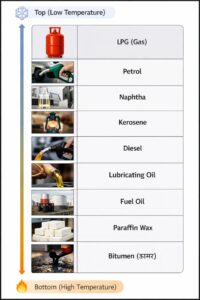
    इस चरण में कच्चे तेल और प्राकृतिक गैस का अन्वेषण एवं उत्पादन किया जाता है। रिफाइनरी में कच्चे तेल का आसवन कर विभिन्न अंश प्राप्त किए जाते हैं, जैसे- नेफ्था, एलपीजी, एथेन आदि। यही पदार्थ आगे पेट्रोकेमिकल उत्पादन के लिए फीडस्टॉक के रूप में प्रयुक्त होते हैं।

English:

   In this stage, exploration and production of crude oil and natural gas are carried out. In refineries, crude oil is distilled to obtain various fractions such as naphtha, LPG, ethane, etc. These materials are used as feedstock for further petrochemical production.

(2) Midstream:

  इस चरण में क्रैकिंग प्रक्रिया द्वारा नेफ्था या गैस को तोड़कर एथिलीन, प्रोपिलीन, ब्यूटाडीन जैसे ओलेफिन तथा बेंजीन, टोल्यून, जाइलिन जैसे एरोमैटिक्स तैयार किए जाते हैं। ये आधारभूत रसायन आगे पॉलीमर उत्पादन में प्रयुक्त होते हैं।

English:

   In this stage, through the cracking process, naphtha or gas is broken down to produce olefins such as ethylene, propylene, butadiene and aromatics such as benzene, toluene, and xylene. These basic chemicals are further used in polymer production.

(3) Downstream:

   इस चरण में पॉलीइथिलीन (PE), पॉलीप्रोपिलीन (PP), पॉलीविनाइल क्लोराइड (PVC), सिंथेटिक रबर, पॉलिएस्टर फाइबर, प्लास्टिक उत्पाद आदि का निर्माण होता है। यही उत्पाद उपभोक्ता वस्तुओं और औद्योगिक उत्पादों में उपयोग किए जाते हैं।

English:

   In this stage, polyethylene (PE), polypropylene (PP), polyvinyl chloride (PVC), synthetic rubber, polyester fiber, plastic products, etc., are manufactured. These products are used in consumer goods and industrial products.
Petro-Chemical Complexes with

Note: औद्योगिक कच्चा माल नेफ्था (petroleum derivative) का उपयोग रासायनिक उर्वरक (खाद), नाइट्रोजन उत्पाद और कीटनाशक बनाने में होता है।

भारत के प्रमुख पेट्रोकेमिकल कॉम्प्लेक्स

Major Petrochemical Complexes in India

1.  जामनगर (गुजरात)

Jamnagar (Gujarat):

     जामनगर गुजरात राज्य के सौराष्ट्र क्षेत्र में स्थित भारत का सबसे प्रमुख रिफाइनरी एवं पेट्रोकेमिकल केंद्र है। यहाँ विश्व के सबसे बड़े एकीकृत रिफाइनरी परिसरों में से एक स्थापित है, जिसका संचालन Reliance Industries द्वारा किया जाता है। जामनगर परिसर में दो विशाल रिफाइनरियाँ तथा उन्नत पेट्रोकेमिकल इकाइयाँ कार्यरत हैं।

     इस कॉम्प्लेक्स की प्रमुख विशेषता Oil-to-Chemicals (O2C) मॉडल है, जिसमें कच्चे तेल को रिफाइन कर सीधे उच्च मूल्य वाले रसायनों और पॉलिमर उत्पादों में परिवर्तित किया जाता है। यहाँ एथिलीन, प्रोपिलीन, पॉलीइथिलीन, पॉलीप्रोपिलीन, एरोमैटिक्स तथा विभिन्न स्पेशलिटी केमिकल्स का उत्पादन होता है।

      जामनगर की तटीय स्थिति और आधुनिक बंदरगाह सुविधा के कारण कच्चे तेल का आयात और तैयार उत्पादों का निर्यात अत्यंत सुगम है। यह परिसर भारत की ऊर्जा सुरक्षा, निर्यात आय और औद्योगिक विकास में महत्वपूर्ण योगदान देता है।

      उन्नत तकनीक, डिजिटल नियंत्रण प्रणाली और पर्यावरणीय मानकों के पालन के कारण जामनगर पेट्रोकेमिकल कॉम्प्लेक्स को वैश्विक स्तर पर प्रतिस्पर्धी माना जाता है। यह भारत को विश्व पेट्रोकेमिकल मानचित्र पर एक प्रमुख स्थान दिलाने में अग्रणी भूमिका निभा रहा है।

English:

   Jamnagar, located in the Saurashtra region of Gujarat, is the most prominent refinery and petrochemical center in India. One of the world’s largest integrated refinery complexes is established here, operated by Reliance Industries. The Jamnagar complex has two massive refineries along with advanced petrochemical units.

   The main feature of this complex is the Oil-to-Chemicals (O2C) model, in which crude oil is refined and directly converted into high-value chemicals and polymer products. Ethylene, propylene, polyethylene, polypropylene, aromatics, and various specialty chemicals are produced here.

   Due to its coastal location and modern port facilities, import of crude oil and export of finished products are very convenient. This complex contributes significantly to India’s energy security, export earnings, and industrial development.

   Because of advanced technology, digital control systems, and adherence to environmental standards, the Jamnagar petrochemical complex is considered globally competitive. It is playing a leading role in placing India prominently on the global petrochemical map.

2. पानीपत (हरियाणा):-

Panipat (Haryana): 

     पानीपत हरियाणा राज्य में स्थित उत्तर भारत का एक प्रमुख रिफाइनरी एवं पेट्रोकेमिकल केंद्र है। यहाँ स्थित पानीपत रिफाइनरी और पेट्रोकेमिकल कॉम्प्लेक्स का संचालन Indian Oil Corporation (IOCL) द्वारा किया जाता है। यह भारत की सबसे बड़ी सार्वजनिक क्षेत्र की तेल विपणन एवं रिफाइनिंग कंपनी है।

    पानीपत कॉम्प्लेक्स की विशेषता इसकी नाफ्था क्रैकर इकाई है, जो एथिलीन और प्रोपिलीन जैसे आधारभूत पेट्रोकेमिकल्स का उत्पादन करती है। इन्हीं रसायनों से पॉलीइथिलीन, पॉलीप्रोपिलीन और अन्य पॉलिमर तैयार किए जाते हैं, जो प्लास्टिक, पैकेजिंग, ऑटोमोबाइल, वस्त्र एवं उपभोक्ता उद्योगों में व्यापक रूप से उपयोग होते हैं।

    यह कॉम्प्लेक्स राष्ट्रीय राजधानी क्षेत्र (NCR) और उत्तर भारत के औद्योगिक बाजारों के निकट स्थित है, जिससे तैयार उत्पादों की आपूर्ति सुगम होती है। साथ ही, यह क्षेत्र रेल और सड़क नेटवर्क से अच्छी तरह जुड़ा हुआ है।

     पानीपत पेट्रोकेमिकल कॉम्प्लेक्स ने क्षेत्रीय आर्थिक विकास, रोजगार सृजन और औद्योगिक आत्मनिर्भरता में महत्वपूर्ण योगदान दिया है। आधुनिक तकनीक, ऊर्जा दक्षता और पर्यावरणीय मानकों के पालन के कारण यह भारत के प्रमुख एकीकृत पेट्रोकेमिकल परिसरों में गिना जाता है।

English:

    Panipat, located in Haryana, is a major refinery and petrochemical center in North India. The Panipat Refinery and Petrochemical Complex is operated by Indian Oil Corporation (IOCL), which is India’s largest public sector oil marketing and refining company.

    The key feature of the Panipat complex is its naphtha cracker unit, which produces basic petrochemicals such as ethylene and propylene. These chemicals are used to manufacture polyethylene, polypropylene, and other polymers widely used in plastics, packaging, automobiles, textiles, and consumer industries.

    This complex is located near the National Capital Region (NCR) and industrial markets of North India, making the supply of finished products convenient. It is also well connected by rail and road networks.

    The Panipat petrochemical complex has made significant contributions to regional economic development, employment generation, and industrial self-reliance. Due to modern technology, energy efficiency, and environmental compliance, it is considered one of India’s major integrated petrochemical complexes.

3. दाहेज (गुजरात)

Dahej (Gujarat):

      दाहेज गुजरात राज्य के भरूच (Bharuch) जिले में खंभात की खाड़ी (Gulf of Khambhat) के तट पर स्थित है। इसकी समुद्री स्थिति इसे एक प्रमुख औद्योगिक और बंदरगाह केंद्र बनाती है। यहाँ गहरे पानी का बंदरगाह (Deep Draft Port) उपलब्ध है, जिससे बड़े जहाज सीधे कच्चा माल और तैयार माल का परिवहन कर सकते हैं।

  अर्थात Dahej क्षेत्र को PCPIR (Petroleum, Chemicals and Petrochemical Investment Region) के रूप में विकसित किया गया है। यह क्लस्टर आधारित औद्योगिक मॉडल का उत्कृष्ट उदाहरण है। यहाँ LNG टर्मिनल, बंदरगाह सुविधा और अनेक केमिकल इकाइयाँ स्थित हैं। यह भारत के सबसे बड़े निवेश आकर्षण क्षेत्रों में से एक है।

English:

   Dahej is located in the Bharuch district of Gujarat on the coast of the Gulf of Khambhat. Its coastal location makes it a major industrial and port center. It has a deep draft port that allows large ships to transport raw materials and finished goods directly.

   The Dahej region has been developed as a PCPIR (Petroleum, Chemicals and Petrochemical Investment Region). It is an excellent example of a cluster-based industrial model. It includes LNG terminals, port facilities, and numerous chemical units. It is one of the largest investment attraction zones in India.

4. हल्दिया (पश्चिम बंगाल)

Haldia (West Bengal):

    हल्दिया पश्चिम बंगाल के पूर्वी मेदिनीपुर जिले में स्थित एक प्रमुख औद्योगिक एवं पेट्रोकेमिकल केंद्र है। यहाँ Haldia Petrochemicals Limited कार्यरत है, जो पॉलीइथिलीन, पॉलीप्रोपिलीन तथा अन्य पेट्रोकेमिकल उत्पादों का निर्माण करती है। हल्दिया बंदरगाह (Haldia Dock Complex) की उपलब्धता के कारण कच्चे माल का आयात और तैयार उत्पादों का निर्यात सुगम है। यह पूर्वी एवं उत्तर-पूर्वी भारत के लिए पेट्रोकेमिकल आपूर्ति का महत्वपूर्ण आधार है तथा क्षेत्रीय औद्योगिक विकास और रोजगार सृजन में महत्वपूर्ण भूमिका निभाता है।

English:

   Haldia is a major industrial and petrochemical center located in the Purba Medinipur district of West Bengal. Haldia Petrochemicals Limited operates here and produces polyethylene, polypropylene, and other petrochemical products. The availability of Haldia Dock Complex facilitates easy import of raw materials and export of finished goods. It serves as an important supply base for eastern and northeastern India and plays a key role in regional industrial development and employment generation.

5. हजीरा (गुजरात)

Hazira (Gujarat):

      हजीरा गुजरात राज्य के सूरत जिले में अरब सागर के तट पर स्थित एक महत्वपूर्ण औद्योगिक एवं पेट्रोकेमिकल केंद्र है। इसकी तटीय स्थिति और विकसित बंदरगाह सुविधा इसे कच्चे माल के आयात तथा तैयार उत्पादों के निर्यात के लिए अत्यंत उपयुक्त बनाती है।

     हजीरा में गैस आधारित पेट्रोकेमिकल इकाइयाँ प्रमुख हैं। यहाँ Oil and Natural Gas Corporation (ONGC) की गैस प्रसंस्करण इकाइयाँ तथा अन्य निजी एवं सार्वजनिक क्षेत्र की कंपनियाँ कार्यरत हैं। प्राकृतिक गैस की उपलब्धता के कारण यहाँ एथिलीन, प्रोपिलीन तथा विभिन्न पॉलिमर उत्पादों का निर्माण होता है।

    हजीरा औद्योगिक क्षेत्र दिल्ली-मुंबई औद्योगिक कॉरिडोर (DMIC) से जुड़ा हुआ है, जिससे परिवहन एवं लॉजिस्टिक सुविधाएँ मजबूत हुई हैं। यह क्षेत्र गुजरात को भारत का अग्रणी पेट्रोकेमिकल हब बनाने में महत्वपूर्ण भूमिका निभाता है।

    इसके अतिरिक्त, हजीरा क्षेत्र में पर्यावरणीय प्रबंधन, आधुनिक अवसंरचना तथा ऊर्जा आपूर्ति की बेहतर व्यवस्था उपलब्ध है, जिससे यह राष्ट्रीय और अंतरराष्ट्रीय निवेश के लिए आकर्षक केंद्र बना हुआ है।

English:

   Hazira is an important industrial and petrochemical center located in the Surat district of Gujarat on the Arabian Sea coast. Its coastal location and developed port facilities make it highly suitable for import of raw materials and export of finished products.

   Gas-based petrochemical units are prominent in Hazira. It houses gas processing units of Oil and Natural Gas Corporation (ONGC) along with other private and public sector companies. Due to the availability of natural gas, ethylene, propylene, and various polymer products are manufactured here.

    Hazira industrial region is connected to the Delhi-Mumbai Industrial Corridor (DMIC), strengthening transportation and logistics facilities. It plays an important role in making Gujarat a leading petrochemical hub in India.

   Additionally, Hazira offers environmental management, modern infrastructure, and reliable energy supply, making it an attractive center for national and international investment.

पेट्रो-केमिकल कॉम्प्लेक्स के प्रमुख उत्पाद

Major Products of Petrochemical Complexes:

✍️ प्लास्टिक और पॉलिमर: पॉलीइथाइलीन (PE), पॉलीप्रोपाइलीन (PP), पॉलिविनाइल क्लोराइड (PVC), पॉलीस्टाइनिन (PS)।

✍️ सिंथेटिक फाइबर: पॉलिएस्टर, नायलॉन, ऐक्रेलिक (कपड़ा उद्योग के लिए)।

✍️ सिंथेटिक रबर: टायर और ऑटोमोबाइल पार्ट्स के लिए।

✍️ औद्योगिक रसायन: एथिलीन ग्लाइकॉल, एसिड, एसीटोन, और सॉल्वैंट्स।

✍️ अन्य: उर्वरक (यूरिया), डिटर्जेंट, पेंट, और डिटर्जेंट के लिए कच्चे माल।

    इन परिसरों में नेफ्था या गैस को स्टीम क्रैकिंग प्रक्रिया के माध्यम से इन उत्पादों में बदला जाता है, जो आधुनिक विनिर्माण की नींव हैं।

English:

✍️ Plastics and polymers: Polyethylene (PE), Polypropylene (PP), Polyvinyl Chloride (PVC), Polystyrene (PS).

✍️ Synthetic fibers: Polyester, Nylon, Acrylic (for textile industry).

✍️ Synthetic rubber: For tyres and automobile parts.

✍️ Industrial chemicals: Ethylene glycol, acids, acetone, and solvents.

✍️ Others: Fertilizers (urea), detergents, paints, and raw materials for detergents.

In these complexes, naphtha or gas is converted into these products through the steam cracking process, which forms the foundation of modern manufacturing.

भारत के प्रमुख पेट्रोकेमिकल कॉम्प्लेक्स के स्थान चयन के कारक:

Factors for Location Selection of Petrochemical Complexes in India:

(i) कच्चे माल की उपलब्धता – नेफ्था, प्राकृतिक गैस और कच्चे तेल की निकटता उत्पादन लागत को कम करती है।

(ii) तटीय स्थिति एवं बंदरगाह – आयात-निर्यात सुविधा हेतु गहरे पानी के बंदरगाह आवश्यक होते हैं (जैसे गुजरात तट)।

(iii) ऊर्जा संसाधन – पेट्रोकेमिकल उद्योग ऊर्जा-गहन है, इसलिए बिजली एवं गैस की निरंतर आपूर्ति जरूरी है।

(iv) जल उपलब्धता – शीतलन (Cooling) एवं औद्योगिक प्रक्रियाओं के लिए पर्याप्त जल की आवश्यकता होती है।

(v) परिवहन सुविधा – सड़क, रेल, पाइपलाइन एवं बंदरगाह नेटवर्क से जुड़ाव लागत घटाता है।

(vi) बाजार की निकटता – तैयार उत्पादों की खपत के लिए बड़े औद्योगिक एवं शहरी बाजार महत्वपूर्ण हैं।

(vii) सरकारी नीतिगत समर्थन – PCPIR /Petroleum, Chemicals and Petrochemicals Investment Region, औद्योगिक कॉरिडोर और कर प्रोत्साहन स्थान चयन को प्रभावित करते हैं।

(viii) भूमि एवं अवसंरचना – बड़े भू-क्षेत्र और विकसित औद्योगिक ढाँचा आवश्यक होता है।

English:

(i) Availability of raw materials – proximity to naphtha, natural gas, and crude oil reduces production cost.

(ii) Coastal location and ports – deep water ports are essential for import-export facilities (e.g., Gujarat coast).

(iii) Energy resources – petrochemical industry is energy-intensive, so continuous supply of electricity and gas is necessary.

(iv) Water availability – sufficient water is required for cooling and industrial processes.

(v) Transport facilities – connectivity with road, rail, pipelines, and ports reduces cost.

(vi) Market proximity – large industrial and urban markets are important for consumption of finished products.

(vii) Government policy support – PCPIR, industrial corridors, and tax incentives influence location selection.

(viii) Land and infrastructure – large land area and developed industrial infrastructure are required.

आर्थिक महत्व:

Economic Importance:

✍️ विनिर्माण GDP में महत्वपूर्ण योगदान।

✍️ प्लास्टिक, ऑटोमोबाइल, वस्त्र, पैकेजिंग एवं फार्मा उद्योग को कच्चा माल उपलब्ध कराना।

✍️ निर्यात आय में वृद्धि।

✍️ प्रत्यक्ष एवं अप्रत्यक्ष रोजगार सृजन।

✍️ MSME / Ministry of Micro, Small and Medium Enterprises क्षेत्र को किफायती कच्चा माल।

✍️ औद्योगिक आत्मनिर्भरता और आयात प्रतिस्थापन को बढ़ावा।

English:

✍️ Significant contribution to manufacturing GDP.

✍️ Provides raw materials to plastics, automobile, textile, packaging, and pharmaceutical industries.

✍️ Increase in export earnings.

✍️ Generation of direct and indirect employment.

✍️ Affordable raw materials for MSME (Ministry of Micro, Small and Medium Enterprises) sector.

✍️ Promotes industrial self-reliance and import substitution.

सरकारी नीतियाँ:

Government Policies:

✍️ PCPIR (Petroleum, Chemicals & Petrochemical Investment Region) नीति।

✍️ मेक इन इंडिया पहल।

✍️ आत्मनिर्भर भारत अभियान।

✍️ उत्पादन आधारित प्रोत्साहन (PLI) योजनाएँ।

✍️ विदेशी निवेश (FDI) को प्रोत्साहन।

✍️ औद्योगिक कॉरिडोर (DMIC आदि) का विकास।

English:

✍️ PCPIR (Petroleum, Chemicals & Petrochemical Investment Region) policy.

✍️ Make in India initiative.

✍️ Atmanirbhar Bharat campaign.

✍️ Production Linked Incentive (PLI) schemes.

✍️ Promotion of Foreign Direct Investment (FDI).

✍️ Development of industrial corridors (DMIC, etc.).

पर्यावरणीय प्रभाव:

Environmental Impact:

✍️ वायु प्रदूषण (SOx, NOx, CO₂ उत्सर्जन)।

✍️ जल प्रदूषण एवं रासायनिक अपशिष्ट।

✍️ ठोस एवं खतरनाक कचरा।

✍️ ग्रीनहाउस गैस उत्सर्जन।

✍️ समुद्री एवं तटीय पारिस्थितिकी पर प्रभाव।

✍️ समाधान हेतु ग्रीन टेक्नोलॉजी और रीसाइक्लिंग की आवश्यकता।

English:

✍️ Air pollution (SOx, NOx, CO₂ emissions).

✍️ Water pollution and chemical waste.

✍️ Solid and hazardous waste.

✍️ Greenhouse gas emissions.

✍️ Impact on marine and coastal ecosystems.

✍️ Need for green technology and recycling solutions.

चुनौतियाँ:

Challenges:

✍️ कच्चे तेल की कीमतों में उतार-चढ़ाव।

✍️ उच्च पूंजी निवेश की आवश्यकता।

✍️ वैश्विक प्रतिस्पर्धा।

✍️ पर्यावरणीय नियमों का कड़ाई से पालन।

✍️ तकनीकी निर्भरता और नवाचार की कमी।

✍️ प्लास्टिक उपयोग पर वैश्विक प्रतिबंधों का प्रभाव।

English:

✍️ Fluctuations in crude oil prices.

✍️ High capital investment requirement.

✍️ Global competition.

✍️ Strict compliance with environmental regulations.

✍️ Technological dependence and lack of innovation.

✍️ Impact of global restrictions on plastic use.

भविष्य की संभावनाएँ (Future Prospects):

✍️ Oil-to-Chemicals (O2C) मॉडल का विस्तार।

✍️ स्पेशलिटी केमिकल्स उत्पादन में वृद्धि।

✍️ बायो-पेट्रोकेमिकल्स का विकास।

✍️ निर्यात उन्मुख उत्पादन रणनीति।

✍️ डिजिटल ऑटोमेशन और ऊर्जा दक्षता।

✍️ सर्कुलर इकोनॉमी और ग्रीन टेक्नोलॉजी को अपनाना।

English:

✍️ Expansion of Oil-to-Chemicals (O2C) model.

✍️ Growth in specialty chemicals production.

✍️ Development of bio-petrochemicals.

✍️ Export-oriented production strategy.

✍️ Digital automation and energy efficiency.

✍️ Adoption of circular economy and green technologies.

निष्कर्ष (Conclusion):

   पेट्रोकेमिकल कॉम्प्लेक्स भारत की औद्योगिक संरचना के महत्वपूर्ण आधार हैं। ये न केवल आर्थिक विकास को गति देते हैं, बल्कि रोजगार, निर्यात और औद्योगिक आत्मनिर्भरता को भी सुदृढ़ करते हैं। उचित नीति, पर्यावरण संतुलन और तकनीकी नवाचार के माध्यम से भारत इस क्षेत्र में वैश्विक नेतृत्व की दिशा में आगे बढ़ सकता है।

    Petrochemical complexes are an important foundation of India’s industrial structure. They not only accelerate economic growth but also strengthen employment, exports, and industrial self-reliance. With proper policies, environmental balance, and technological innovation, India can move towards global leadership in this sector.


1. Methods of Primary Data Collection / प्राथमिक आँकड़ों के संकलन की विधियाँ

Methods of Primary Data Collection

प्राथमिक आँकड़ों के संकलन की विधियाँ

Methods of Primary Data Collection

परिचय (Introduction)

      सामाजिक विज्ञान, भूगोल, अर्थशास्त्र, शिक्षा तथा अन्य शोध क्षेत्रों में प्राथमिक आँकड़ों (Primary Data) का अत्यधिक महत्व होता है। प्राथमिक आँकड़े वे आँकड़े होते हैं जिन्हें शोधकर्ता स्वयं प्रत्यक्ष रूप से क्षेत्र (Field) से एकत्रित करता है।

      In social sciences, geography, economics, education, and other research fields, primary data plays a very important role. Primary data refers to the data that is collected directly from the field by the researcher.

      ये आँकड़े अधिक विश्वसनीय (Reliable), यथार्थपरक (Realistic) तथा सटीक (Accurate) माने जाते हैं क्योंकि इन्हें सीधे स्रोत से प्राप्त किया जाता है।

     These data are considered more reliable, realistic, and accurate because they are obtained directly from the original source.

    प्राथमिक आँकड़ों के संकलन की प्रमुख विधियाँ हैं-

    The main methods of collecting primary data are-

1. प्रश्नावली विधि (Questionnaire Method)

2. अनुसूची विधि (Schedule Method)

3. साक्षात्कार विधि (Interview Method)

4. अवलोकन विधि (Observation Method) 

5. सर्वेक्षण (Field Survey) 

6. प्रयोग या परीक्षण (Experiment)

 प्रश्नावली (Questionnaire)

प्रश्नावली का अर्थ (Meaning of Questionnaire)

     प्रश्नावली प्रश्नों का एक सुव्यवस्थित लिखित रूप होती है, जिसे उत्तरदाताओं को दिया जाता है ताकि वे स्वयं अपने उत्तर लिख सकें। इसमें शोध से संबंधित प्रश्न पहले से निर्धारित होते हैं।

English:

   A questionnaire is a systematic written set of questions given to respondents so that they can write their answers themselves. The questions are predetermined according to the research objectives.

परिभाषा (Definition)

   प्रश्नावली वह साधन है, जिसके माध्यम से शोधकर्ता लिखित प्रश्नों द्वारा उत्तरदाताओं से जानकारी प्राप्त करता है।

English:

    A questionnaire is a research tool through which a researcher collects information from respondents using written questions.

प्रश्नावली की विशेषताएँ (Characteristics of Questionnaire)

✍️ यह लिखित रूप में होती है।

It is in written form.

✍️ उत्तरदाता स्वयं प्रश्न पढ़कर उत्तर देता है।

The respondent reads the questions and answers them independently.

✍️ प्रश्न क्रमबद्ध और स्पष्ट होते हैं।

Questions are arranged in a systematic and clear manner.

✍️ यह कम लागत वाली विधि है।

It is a low-cost method.

✍️ बड़े क्षेत्र और अधिक जनसंख्या के अध्ययन में उपयोगी है।

It is useful for studies covering large areas and large populations.

प्रश्नावली के प्रकार

Types of Questionnaire

(i) संरचित प्रश्नावली

Structured Questionnaire

     संरचित प्रश्नावली में प्रश्न पहले से निश्चित होते हैं और उत्तर के विकल्प भी दिए जाते हैं। उत्तरदाता को उन्हीं विकल्पों में से सही उत्तर चुनना होता है।

English:

    In a structured questionnaire, the questions are predetermined and answer options are provided. The respondent selects the appropriate answer from the given options.

उदाहरण (Example)

विषय: किसी क्षेत्र में जल की उपलब्धता का अध्ययन

Topic: Study of Water Availability in an Area

1. आपके घर में पानी का मुख्य स्रोत क्या है?

What is the main source of water in your household?

(a) नल जल / Tap Water

(b) कुआँ / Well

(c) हैंडपंप / Hand Pump

(d) टैंकर / Water Tanker

2. क्या आपको प्रतिदिन पर्याप्त पानी मिल जाता है?

Do you receive sufficient water daily?

(a) हाँ / Yes

(b) नहीं / No

3. आपके क्षेत्र में पानी की समस्या कितनी गंभीर है?

How serious is the water problem in your area?

(a) बहुत अधिक / Very High

(b) मध्यम / Moderate

(c) कम / Low

(d) नहीं है / No Problem

4. पानी की आपूर्ति कितनी बार होती है?

How often is water supplied?

(a) प्रतिदिन / Daily

(b) दो दिन में एक बार / Once in Two Days

(c) सप्ताह में एक बार / Once a Week

संक्षेप में इसमें

✍️ प्रश्न निश्चित और पूर्वनिर्धारित होते हैं।

Questions are fixed and predetermined.

✍️ उत्तर के विकल्प पहले से दिए जाते हैं।

Answer options are already provided.

   अर्थात् संरचित प्रश्नावली में सभी प्रश्न और उत्तर पहले से तय होते हैं, इसलिए इससे प्राप्त आँकड़ों का सांख्यिकीय विश्लेषण (Statistical Analysis) करना आसान होता है।

(ii) असंरचित प्रश्नावली

Unstructured Questionnaire

    असंरचित प्रश्नावली में प्रश्न पहले से निश्चित रूप में सीमित नहीं होते और उत्तरदाता को स्वतंत्र रूप से अपने विचार व्यक्त करने की अनुमति होती है। इसमें उत्तर के विकल्प नहीं दिए जाते, इसलिए उत्तरदाता अपने शब्दों में उत्तर देता है।

English:

    In an unstructured questionnaire, the questions are open and flexible. Respondents are free to express their views in their own words, and predefined answer options are not provided.

उदाहरण (Example)

विषय: किसी क्षेत्र में जल समस्या का अध्ययन

Topic: Study of Water Problems in an Area

1. आपके क्षेत्र में पानी की स्थिति के बारे में आप क्या सोचते हैं?

What do you think about the water situation in your area?

2. आपके अनुसार पानी की कमी के मुख्य कारण क्या हैं?

According to you, what are the main causes of water shortage?

3. पानी की समस्या से आपके दैनिक जीवन पर क्या प्रभाव पड़ता है?

How does the water problem affect your daily life?

4. पानी की समस्या को दूर करने के लिए क्या उपाय किए जा सकते हैं?

What measures can be taken to solve the water problem?

संक्षेप में (In Short):

   असंरचित प्रश्नावली में उत्तरदाता को विस्तृत और स्वतंत्र उत्तर देने का अवसर मिलता है, जिससे शोधकर्ता को किसी विषय के बारे में गहन (In-depth) और गुणात्मक (Qualitative) जानकारी प्राप्त होती है। 

✍️ प्रश्न खुले होते हैं।

Questions are open-ended.

✍️ उत्तरदाता स्वतंत्र रूप से उत्तर देता है।

Respondents answer freely in their own words.

(iii) खुले प्रश्न

Open-ended Questions   

     खुले प्रश्न वे प्रश्न होते हैं जिनमें उत्तरदाता को अपने शब्दों में स्वतंत्र रूप से उत्तर देने का अवसर मिलता है। इसमें उत्तर के विकल्प पहले से निर्धारित नहीं होते।

English:

    Open-ended questions are those in which respondents are free to answer in their own words. No fixed answer options are provided.

उदाहरण (Examples)

  1. आपके क्षेत्र में जल की समस्या के मुख्य कारण क्या हैं?

  2. What are the main causes of water problems in your area?

  3. आपके अनुसार पर्यावरण प्रदूषण को कम करने के लिए क्या उपाय किए जाने चाहिए?

  4. In your opinion, what measures should be taken to reduce environmental pollution?

  5. आपके क्षेत्र के विकास के लिए सरकार को कौन-कौन से कदम उठाने चाहिए?

  6. What steps should the government take for the development of your area?

  7. आप जलवायु परिवर्तन के प्रभावों को अपने क्षेत्र में कैसे देखते हैं?

  8. How do you observe the impacts of climate change in your area?

✍️ उत्तरदाता अपनी भाषा में उत्तर देता है।

The respondent answers in their own words.

(iv) बंद प्रश्न

Close-ended Questions

     बंद प्रश्न वे प्रश्न होते हैं जिनमें उत्तर के विकल्प पहले से दिए जाते हैं और उत्तरदाता को उन्हीं विकल्पों में से किसी एक को चुनना होता है।

English:

    Close-ended questions are those in which answer options are already provided, and the respondent has to choose one of the given options.

उदाहरण (Examples)

1. क्या आपके क्षेत्र में पेयजल की पर्याप्त सुविधा है?

Is there sufficient drinking water facility in your area?

(a) हाँ / Yes

(b) नहीं / No

2. आप किस प्रकार के आवास में रहते हैं?

What type of house do you live in?

(a) पक्का घर / Pucca House

(b) कच्चा घर / Kutcha House

(c) अर्ध-पक्का / Semi-pucca

3. आपका मुख्य व्यवसाय क्या है?

What is your main occupation?

(a) कृषि / Agriculture

(b) व्यापार / Business

(c) नौकरी / Service

(d) अन्य / Other

4. क्या आपके क्षेत्र में सड़क की सुविधा है?

Is there a road facility in your area?

(a) हाँ / Yes

(b) नहीं / No

✍️ ‘हाँ/नहीं’, बहुविकल्पीय (MCQ) आदि।

Examples include Yes/No questions and Multiple Choice Questions (MCQ).

प्रश्नावली निर्माण के सिद्धांत

Principles of Questionnaire Construction

✍️ प्रश्न सरल और स्पष्ट हों।

Questions should be simple and clear.

✍️ प्रश्न संक्षिप्त हों।

Questions should be brief.

✍️ एक प्रश्न में एक ही बात पूछी जाए।

Each question should ask only one thing.

✍️ कठिन और संवेदनशील प्रश्न अंत में रखें।

Difficult and sensitive questions should be placed at the end.

✍️ तकनीकी शब्दों से बचें।

Avoid technical terms.

✍️ प्रश्न तार्किक क्रम में हों।

Questions should follow a logical order.

प्रश्नावली के लाभ

Advantages of Questionnaire

✍️ कम समय और कम खर्च में जानकारी प्राप्त होती है।

Information can be collected in less time and at low cost.

✍️ पक्षपात की संभावना कम होती है।

There is less possibility of bias.

✍️ उत्तरदाता स्वतंत्र होकर उत्तर देता है।

Respondents can answer freely.

✍️ आँकड़ों का विश्लेषण सरल होता है।

Data analysis becomes easier.

प्रश्नावली की सीमाएँ:

Limitations of Questionnaire

✍️ अशिक्षित उत्तरदाताओं के लिए अनुपयुक्त।

Not suitable for illiterate respondents.

✍️ प्रश्न गलत समझे जाने की संभावना।

Questions may be misunderstood.

✍️ उत्तर न मिलने (Non-response) की समस्या।

There may be a problem of non-response.

✍️ भावनात्मक एवं गहन जानकारी प्राप्त करना कठिन।

It is difficult to obtain emotional or in-depth information.

अनुसूची (Schedule)

अनुसूची का अर्थ (Meaning of Schedule):

    अनुसूची प्रश्नों की एक सूची होती है, जिसे शोधकर्ता या गणनाकर्ता स्वयं उत्तरदाता से पूछकर भरता है। इसमें उत्तरदाता को स्वयं लिखने की आवश्यकता नहीं होती।

English:

      A schedule is a list of questions that is filled in by the researcher or enumerator after asking the respondent directly. The respondent does not need to write the answers themselves.

परिभाषा (Definition):

    अनुसूची वह विधि है, जिसमें शोधकर्ता प्रत्यक्ष रूप से उत्तरदाता से प्रश्न पूछकर उत्तर लिखता है।

English:

       Schedule is a method in which the researcher directly asks questions to the respondent and records the answers.

अनुसूची की विशेषताएँ (Characteristics of Schedule):

✍️ यह भी प्रश्नों का लिखित रूप होती है।

It is also a written form of questions.

✍️ इसे गणनाकर्ता द्वारा भरा जाता है।

It is filled by the enumerator or researcher.

✍️ अशिक्षित लोगों के लिए उपयुक्त।

It is suitable for illiterate respondents.

✍️ उत्तर की शुद्धता अधिक होती है।

Accuracy of answers is generally higher.

अनुसूची के प्रकार (Types of Schedule):

(i) संरचित अनुसूची (Structured Schedule)-

✍️ निश्चित प्रश्न और विकल्प होते हैं।

Fixed questions and answer options are provided.

उदाहरण (Example):

विषय: किसी गाँव में पेयजल सुविधा का अध्ययन

Topic: Study of Drinking Water Facilities in a Village

1 आपके घर में पानी का मुख्य स्रोत क्या है?

What is the main source of water in your household?

(a) नल जल / Tap Water

(b) हैंडपंप / Hand Pump

(c) कुआँ / Well

(d) अन्य / Other

2. क्या आपको प्रतिदिन पर्याप्त पानी मिल जाता है?

Do you get sufficient water daily?

(a) हाँ / Yes

(b) नहीं / No

3. पानी की आपूर्ति कितनी बार होती है?

How often is water supplied?

(a) प्रतिदिन / Daily

(b) दो दिन में एक बार / Once in two days

(c) सप्ताह में एक बार / Once a week

4. क्या आपके क्षेत्र में पानी की समस्या है?

Is there a water problem in your area?

(a) हाँ / Yes

(b) नहीं / No

(ii) असंरचित अनुसूची (Unstructured Schedule)-

✍️ खुले प्रश्नों पर आधारित होती है।

It is based on open-ended questions.

     अर्थात् असंरचित अनुसूची में प्रश्न पहले से निश्चित नहीं होते। इसमें अधिकतर खुले प्रश्न (Open-ended Questions) होते हैं और उत्तरदाता अपने विचारों के अनुसार उत्तर देता है। शोधकर्ता या गणनाकर्ता उत्तरों को स्वयं लिखता है।

English:
     In an unstructured schedule, questions are not fixed in advance. Most questions are open-ended, and the respondent can answer freely. The researcher or enumerator records the responses.

उदाहरण (Example)

विषय: किसी क्षेत्र में पर्यावरण समस्याओं का अध्ययन

Topic: Study of Environmental Problems in an Area

1. आपके क्षेत्र में मुख्य पर्यावरण समस्याएँ क्या हैं?

What are the major environmental problems in your area?

2. इन समस्याओं के मुख्य कारण क्या हैं?

What are the main causes of these problems?

3. पर्यावरण संरक्षण के लिए आपके अनुसार क्या उपाय किए जाने चाहिए?

According to you, what measures should be taken to protect the environment?

4. क्या सरकार द्वारा पर्यावरण सुधार के लिए कोई कदम उठाए गए हैं?

Have any steps been taken by the government to improve the environment?

अनुसूची के लाभ (Advantages of Schedule):

✍️ अशिक्षित उत्तरदाताओं से भी जानकारी मिलती है।

Information can be collected even from illiterate respondents.

✍️ उत्तर अधिक पूर्ण और सही होते हैं।

Answers are more complete and accurate.

✍️ उत्तर न मिलने की समस्या कम होती है।

The problem of non-response is reduced.

✍️ प्रश्न समझाने की सुविधा होती है।

Questions can be explained to the respondents.

अनुसूची की सीमाएँ (Limitations of Schedule):

✍️ समय और धन अधिक लगता है।

It requires more time and money.

✍️ प्रशिक्षित गणनाकर्ताओं की आवश्यकता होती है।

Trained enumerators are required.

✍️ व्यक्तिगत पक्षपात की संभावना रहती है।

There is a possibility of personal bias.

✍️ बड़े क्षेत्र में इसका प्रयोग कठिन होता है।

It is difficult to use in large areas.

error: