|
परिचय (Introduction):
पेट्रोकेमिकल कॉम्प्लेक्स वे एकीकृत औद्योगिक परिसर हैं जहाँ कच्चे तेल (Crude Oil) अथवा प्राकृतिक गैस से विभिन्न आधारभूत एवं उच्च मूल्य के रासायनिक उत्पादों का बड़े पैमाने पर उत्पादन किया जाता है। ये कॉम्प्लेक्स आधुनिक औद्योगिक अर्थव्यवस्था के केंद्रीय स्तंभ माने जाते हैं, क्योंकि इनके उत्पाद प्लास्टिक, सिंथेटिक फाइबर, रबर, उर्वरक, डिटर्जेंट, पेंट, दवा, पैकेजिंग, ऑटोमोबाइल तथा इलेक्ट्रॉनिक्स जैसे अनेक उद्योगों के लिए कच्चा माल प्रदान करते हैं।
भारत में पेट्रोकेमिकल उद्योग का विकास 1960 के दशक में सार्वजनिक क्षेत्र के उपक्रमों से प्रारंभ हुआ, परंतु 1991 के आर्थिक उदारीकरण के बाद निजी क्षेत्र की भागीदारी और विदेशी निवेश के कारण इस क्षेत्र में तीव्र वृद्धि हुई। आज भारत विश्व के प्रमुख पेट्रोकेमिकल उपभोक्ता और उत्पादक देशों में सम्मिलित है।
English:
Petrochemical complexes are integrated industrial units where crude oil or natural gas is processed to produce a wide range of basic and high-value chemical products on a large scale. These complexes are considered the backbone of the modern industrial economy because their products provide raw materials for many industries such as plastics, synthetic fibers, rubber, fertilizers, detergents, paints, pharmaceuticals, packaging, automobiles, and electronics.
In India, the petrochemical industry began developing in the 1960s through public sector enterprises, but after the economic liberalization of 1991, rapid growth occurred due to private sector participation and foreign investment. Today, India is among the major petrochemical consumers and producers in the world.
पेट्रोकेमिकल कॉम्प्लेक्स की संरचना
Structure of Petrochemical Complex:
पेट्रोकेमिकल कॉम्प्लेक्स सामान्यतः तीन स्तरों में विभाजित होते हैं:
English:
Petrochemical complexes are generally divided into three levels:
(1) Upstream:
इस चरण में कच्चे तेल और प्राकृतिक गैस का अन्वेषण एवं उत्पादन किया जाता है। रिफाइनरी में कच्चे तेल का आसवन कर विभिन्न अंश प्राप्त किए जाते हैं, जैसे- नेफ्था, एलपीजी, एथेन आदि। यही पदार्थ आगे पेट्रोकेमिकल उत्पादन के लिए फीडस्टॉक के रूप में प्रयुक्त होते हैं।
English:
In this stage, exploration and production of crude oil and natural gas are carried out. In refineries, crude oil is distilled to obtain various fractions such as naphtha, LPG, ethane, etc. These materials are used as feedstock for further petrochemical production.
(2) Midstream:
इस चरण में क्रैकिंग प्रक्रिया द्वारा नेफ्था या गैस को तोड़कर एथिलीन, प्रोपिलीन, ब्यूटाडीन जैसे ओलेफिन तथा बेंजीन, टोल्यून, जाइलिन जैसे एरोमैटिक्स तैयार किए जाते हैं। ये आधारभूत रसायन आगे पॉलीमर उत्पादन में प्रयुक्त होते हैं।
English:
In this stage, through the cracking process, naphtha or gas is broken down to produce olefins such as ethylene, propylene, butadiene and aromatics such as benzene, toluene, and xylene. These basic chemicals are further used in polymer production.
(3) Downstream:
इस चरण में पॉलीइथिलीन (PE), पॉलीप्रोपिलीन (PP), पॉलीविनाइल क्लोराइड (PVC), सिंथेटिक रबर, पॉलिएस्टर फाइबर, प्लास्टिक उत्पाद आदि का निर्माण होता है। यही उत्पाद उपभोक्ता वस्तुओं और औद्योगिक उत्पादों में उपयोग किए जाते हैं।
English:
In this stage, polyethylene (PE), polypropylene (PP), polyvinyl chloride (PVC), synthetic rubber, polyester fiber, plastic products, etc., are manufactured. These products are used in consumer goods and industrial products.
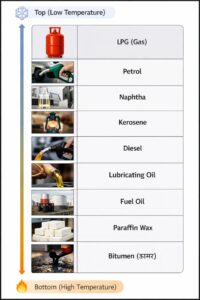
Note: औद्योगिक कच्चा माल नेफ्था (petroleum derivative) का उपयोग रासायनिक उर्वरक (खाद), नाइट्रोजन उत्पाद और कीटनाशक बनाने में होता है।
भारत के प्रमुख पेट्रोकेमिकल कॉम्प्लेक्स
Major Petrochemical Complexes in India
1. जामनगर (गुजरात)
Jamnagar (Gujarat):
जामनगर गुजरात राज्य के सौराष्ट्र क्षेत्र में स्थित भारत का सबसे प्रमुख रिफाइनरी एवं पेट्रोकेमिकल केंद्र है। यहाँ विश्व के सबसे बड़े एकीकृत रिफाइनरी परिसरों में से एक स्थापित है, जिसका संचालन Reliance Industries द्वारा किया जाता है। जामनगर परिसर में दो विशाल रिफाइनरियाँ तथा उन्नत पेट्रोकेमिकल इकाइयाँ कार्यरत हैं।
इस कॉम्प्लेक्स की प्रमुख विशेषता Oil-to-Chemicals (O2C) मॉडल है, जिसमें कच्चे तेल को रिफाइन कर सीधे उच्च मूल्य वाले रसायनों और पॉलिमर उत्पादों में परिवर्तित किया जाता है। यहाँ एथिलीन, प्रोपिलीन, पॉलीइथिलीन, पॉलीप्रोपिलीन, एरोमैटिक्स तथा विभिन्न स्पेशलिटी केमिकल्स का उत्पादन होता है।
जामनगर की तटीय स्थिति और आधुनिक बंदरगाह सुविधा के कारण कच्चे तेल का आयात और तैयार उत्पादों का निर्यात अत्यंत सुगम है। यह परिसर भारत की ऊर्जा सुरक्षा, निर्यात आय और औद्योगिक विकास में महत्वपूर्ण योगदान देता है।
उन्नत तकनीक, डिजिटल नियंत्रण प्रणाली और पर्यावरणीय मानकों के पालन के कारण जामनगर पेट्रोकेमिकल कॉम्प्लेक्स को वैश्विक स्तर पर प्रतिस्पर्धी माना जाता है। यह भारत को विश्व पेट्रोकेमिकल मानचित्र पर एक प्रमुख स्थान दिलाने में अग्रणी भूमिका निभा रहा है।
English:
Jamnagar, located in the Saurashtra region of Gujarat, is the most prominent refinery and petrochemical center in India. One of the world’s largest integrated refinery complexes is established here, operated by Reliance Industries. The Jamnagar complex has two massive refineries along with advanced petrochemical units.
The main feature of this complex is the Oil-to-Chemicals (O2C) model, in which crude oil is refined and directly converted into high-value chemicals and polymer products. Ethylene, propylene, polyethylene, polypropylene, aromatics, and various specialty chemicals are produced here.
Due to its coastal location and modern port facilities, import of crude oil and export of finished products are very convenient. This complex contributes significantly to India’s energy security, export earnings, and industrial development.
Because of advanced technology, digital control systems, and adherence to environmental standards, the Jamnagar petrochemical complex is considered globally competitive. It is playing a leading role in placing India prominently on the global petrochemical map.
2. पानीपत (हरियाणा):-
Panipat (Haryana):
पानीपत हरियाणा राज्य में स्थित उत्तर भारत का एक प्रमुख रिफाइनरी एवं पेट्रोकेमिकल केंद्र है। यहाँ स्थित पानीपत रिफाइनरी और पेट्रोकेमिकल कॉम्प्लेक्स का संचालन Indian Oil Corporation (IOCL) द्वारा किया जाता है। यह भारत की सबसे बड़ी सार्वजनिक क्षेत्र की तेल विपणन एवं रिफाइनिंग कंपनी है।
पानीपत कॉम्प्लेक्स की विशेषता इसकी नाफ्था क्रैकर इकाई है, जो एथिलीन और प्रोपिलीन जैसे आधारभूत पेट्रोकेमिकल्स का उत्पादन करती है। इन्हीं रसायनों से पॉलीइथिलीन, पॉलीप्रोपिलीन और अन्य पॉलिमर तैयार किए जाते हैं, जो प्लास्टिक, पैकेजिंग, ऑटोमोबाइल, वस्त्र एवं उपभोक्ता उद्योगों में व्यापक रूप से उपयोग होते हैं।
यह कॉम्प्लेक्स राष्ट्रीय राजधानी क्षेत्र (NCR) और उत्तर भारत के औद्योगिक बाजारों के निकट स्थित है, जिससे तैयार उत्पादों की आपूर्ति सुगम होती है। साथ ही, यह क्षेत्र रेल और सड़क नेटवर्क से अच्छी तरह जुड़ा हुआ है।
पानीपत पेट्रोकेमिकल कॉम्प्लेक्स ने क्षेत्रीय आर्थिक विकास, रोजगार सृजन और औद्योगिक आत्मनिर्भरता में महत्वपूर्ण योगदान दिया है। आधुनिक तकनीक, ऊर्जा दक्षता और पर्यावरणीय मानकों के पालन के कारण यह भारत के प्रमुख एकीकृत पेट्रोकेमिकल परिसरों में गिना जाता है।
English:
Panipat, located in Haryana, is a major refinery and petrochemical center in North India. The Panipat Refinery and Petrochemical Complex is operated by Indian Oil Corporation (IOCL), which is India’s largest public sector oil marketing and refining company.
The key feature of the Panipat complex is its naphtha cracker unit, which produces basic petrochemicals such as ethylene and propylene. These chemicals are used to manufacture polyethylene, polypropylene, and other polymers widely used in plastics, packaging, automobiles, textiles, and consumer industries.
This complex is located near the National Capital Region (NCR) and industrial markets of North India, making the supply of finished products convenient. It is also well connected by rail and road networks.
The Panipat petrochemical complex has made significant contributions to regional economic development, employment generation, and industrial self-reliance. Due to modern technology, energy efficiency, and environmental compliance, it is considered one of India’s major integrated petrochemical complexes.
3. दाहेज (गुजरात)
Dahej (Gujarat):
दाहेज गुजरात राज्य के भरूच (Bharuch) जिले में खंभात की खाड़ी (Gulf of Khambhat) के तट पर स्थित है। इसकी समुद्री स्थिति इसे एक प्रमुख औद्योगिक और बंदरगाह केंद्र बनाती है। यहाँ गहरे पानी का बंदरगाह (Deep Draft Port) उपलब्ध है, जिससे बड़े जहाज सीधे कच्चा माल और तैयार माल का परिवहन कर सकते हैं।
अर्थात Dahej क्षेत्र को PCPIR (Petroleum, Chemicals and Petrochemical Investment Region) के रूप में विकसित किया गया है। यह क्लस्टर आधारित औद्योगिक मॉडल का उत्कृष्ट उदाहरण है। यहाँ LNG टर्मिनल, बंदरगाह सुविधा और अनेक केमिकल इकाइयाँ स्थित हैं। यह भारत के सबसे बड़े निवेश आकर्षण क्षेत्रों में से एक है।
English:
Dahej is located in the Bharuch district of Gujarat on the coast of the Gulf of Khambhat. Its coastal location makes it a major industrial and port center. It has a deep draft port that allows large ships to transport raw materials and finished goods directly.
The Dahej region has been developed as a PCPIR (Petroleum, Chemicals and Petrochemical Investment Region). It is an excellent example of a cluster-based industrial model. It includes LNG terminals, port facilities, and numerous chemical units. It is one of the largest investment attraction zones in India.
4. हल्दिया (पश्चिम बंगाल)
Haldia (West Bengal):
हल्दिया पश्चिम बंगाल के पूर्वी मेदिनीपुर जिले में स्थित एक प्रमुख औद्योगिक एवं पेट्रोकेमिकल केंद्र है। यहाँ Haldia Petrochemicals Limited कार्यरत है, जो पॉलीइथिलीन, पॉलीप्रोपिलीन तथा अन्य पेट्रोकेमिकल उत्पादों का निर्माण करती है। हल्दिया बंदरगाह (Haldia Dock Complex) की उपलब्धता के कारण कच्चे माल का आयात और तैयार उत्पादों का निर्यात सुगम है। यह पूर्वी एवं उत्तर-पूर्वी भारत के लिए पेट्रोकेमिकल आपूर्ति का महत्वपूर्ण आधार है तथा क्षेत्रीय औद्योगिक विकास और रोजगार सृजन में महत्वपूर्ण भूमिका निभाता है।
English:
Haldia is a major industrial and petrochemical center located in the Purba Medinipur district of West Bengal. Haldia Petrochemicals Limited operates here and produces polyethylene, polypropylene, and other petrochemical products. The availability of Haldia Dock Complex facilitates easy import of raw materials and export of finished goods. It serves as an important supply base for eastern and northeastern India and plays a key role in regional industrial development and employment generation.
5. हजीरा (गुजरात)
Hazira (Gujarat):
हजीरा गुजरात राज्य के सूरत जिले में अरब सागर के तट पर स्थित एक महत्वपूर्ण औद्योगिक एवं पेट्रोकेमिकल केंद्र है। इसकी तटीय स्थिति और विकसित बंदरगाह सुविधा इसे कच्चे माल के आयात तथा तैयार उत्पादों के निर्यात के लिए अत्यंत उपयुक्त बनाती है।
हजीरा में गैस आधारित पेट्रोकेमिकल इकाइयाँ प्रमुख हैं। यहाँ Oil and Natural Gas Corporation (ONGC) की गैस प्रसंस्करण इकाइयाँ तथा अन्य निजी एवं सार्वजनिक क्षेत्र की कंपनियाँ कार्यरत हैं। प्राकृतिक गैस की उपलब्धता के कारण यहाँ एथिलीन, प्रोपिलीन तथा विभिन्न पॉलिमर उत्पादों का निर्माण होता है।
हजीरा औद्योगिक क्षेत्र दिल्ली-मुंबई औद्योगिक कॉरिडोर (DMIC) से जुड़ा हुआ है, जिससे परिवहन एवं लॉजिस्टिक सुविधाएँ मजबूत हुई हैं। यह क्षेत्र गुजरात को भारत का अग्रणी पेट्रोकेमिकल हब बनाने में महत्वपूर्ण भूमिका निभाता है।
इसके अतिरिक्त, हजीरा क्षेत्र में पर्यावरणीय प्रबंधन, आधुनिक अवसंरचना तथा ऊर्जा आपूर्ति की बेहतर व्यवस्था उपलब्ध है, जिससे यह राष्ट्रीय और अंतरराष्ट्रीय निवेश के लिए आकर्षक केंद्र बना हुआ है।
English:
Hazira is an important industrial and petrochemical center located in the Surat district of Gujarat on the Arabian Sea coast. Its coastal location and developed port facilities make it highly suitable for import of raw materials and export of finished products.
Gas-based petrochemical units are prominent in Hazira. It houses gas processing units of Oil and Natural Gas Corporation (ONGC) along with other private and public sector companies. Due to the availability of natural gas, ethylene, propylene, and various polymer products are manufactured here.
Hazira industrial region is connected to the Delhi-Mumbai Industrial Corridor (DMIC), strengthening transportation and logistics facilities. It plays an important role in making Gujarat a leading petrochemical hub in India.
Additionally, Hazira offers environmental management, modern infrastructure, and reliable energy supply, making it an attractive center for national and international investment.
पेट्रो-केमिकल कॉम्प्लेक्स के प्रमुख उत्पाद
Major Products of Petrochemical Complexes:
✍️ प्लास्टिक और पॉलिमर: पॉलीइथाइलीन (PE), पॉलीप्रोपाइलीन (PP), पॉलिविनाइल क्लोराइड (PVC), पॉलीस्टाइनिन (PS)।
✍️ सिंथेटिक फाइबर: पॉलिएस्टर, नायलॉन, ऐक्रेलिक (कपड़ा उद्योग के लिए)।
✍️ सिंथेटिक रबर: टायर और ऑटोमोबाइल पार्ट्स के लिए।
✍️ औद्योगिक रसायन: एथिलीन ग्लाइकॉल, एसिड, एसीटोन, और सॉल्वैंट्स।
✍️ अन्य: उर्वरक (यूरिया), डिटर्जेंट, पेंट, और डिटर्जेंट के लिए कच्चे माल।
English:
✍️ Plastics and polymers: Polyethylene (PE), Polypropylene (PP), Polyvinyl Chloride (PVC), Polystyrene (PS).
✍️ Synthetic fibers: Polyester, Nylon, Acrylic (for textile industry).
✍️ Synthetic rubber: For tyres and automobile parts.
✍️ Industrial chemicals: Ethylene glycol, acids, acetone, and solvents.
✍️ Others: Fertilizers (urea), detergents, paints, and raw materials for detergents.
In these complexes, naphtha or gas is converted into these products through the steam cracking process, which forms the foundation of modern manufacturing.
भारत के प्रमुख पेट्रोकेमिकल कॉम्प्लेक्स के स्थान चयन के कारक:
Factors for Location Selection of Petrochemical Complexes in India:
(i) कच्चे माल की उपलब्धता – नेफ्था, प्राकृतिक गैस और कच्चे तेल की निकटता उत्पादन लागत को कम करती है।
(ii) तटीय स्थिति एवं बंदरगाह – आयात-निर्यात सुविधा हेतु गहरे पानी के बंदरगाह आवश्यक होते हैं (जैसे गुजरात तट)।
(iii) ऊर्जा संसाधन – पेट्रोकेमिकल उद्योग ऊर्जा-गहन है, इसलिए बिजली एवं गैस की निरंतर आपूर्ति जरूरी है।
(iv) जल उपलब्धता – शीतलन (Cooling) एवं औद्योगिक प्रक्रियाओं के लिए पर्याप्त जल की आवश्यकता होती है।
(v) परिवहन सुविधा – सड़क, रेल, पाइपलाइन एवं बंदरगाह नेटवर्क से जुड़ाव लागत घटाता है।
(vi) बाजार की निकटता – तैयार उत्पादों की खपत के लिए बड़े औद्योगिक एवं शहरी बाजार महत्वपूर्ण हैं।
(vii) सरकारी नीतिगत समर्थन – PCPIR /Petroleum, Chemicals and Petrochemicals Investment Region, औद्योगिक कॉरिडोर और कर प्रोत्साहन स्थान चयन को प्रभावित करते हैं।
(viii) भूमि एवं अवसंरचना – बड़े भू-क्षेत्र और विकसित औद्योगिक ढाँचा आवश्यक होता है।
English:
(i) Availability of raw materials – proximity to naphtha, natural gas, and crude oil reduces production cost.
(ii) Coastal location and ports – deep water ports are essential for import-export facilities (e.g., Gujarat coast).
(iii) Energy resources – petrochemical industry is energy-intensive, so continuous supply of electricity and gas is necessary.
(iv) Water availability – sufficient water is required for cooling and industrial processes.
(v) Transport facilities – connectivity with road, rail, pipelines, and ports reduces cost.
(vi) Market proximity – large industrial and urban markets are important for consumption of finished products.
(vii) Government policy support – PCPIR, industrial corridors, and tax incentives influence location selection.
(viii) Land and infrastructure – large land area and developed industrial infrastructure are required.
आर्थिक महत्व:
Economic Importance:
✍️ विनिर्माण GDP में महत्वपूर्ण योगदान।
✍️ प्लास्टिक, ऑटोमोबाइल, वस्त्र, पैकेजिंग एवं फार्मा उद्योग को कच्चा माल उपलब्ध कराना।
✍️ निर्यात आय में वृद्धि।
✍️ प्रत्यक्ष एवं अप्रत्यक्ष रोजगार सृजन।
✍️ MSME / Ministry of Micro, Small and Medium Enterprises क्षेत्र को किफायती कच्चा माल।
✍️ औद्योगिक आत्मनिर्भरता और आयात प्रतिस्थापन को बढ़ावा।
English:
✍️ Significant contribution to manufacturing GDP.
✍️ Provides raw materials to plastics, automobile, textile, packaging, and pharmaceutical industries.
✍️ Increase in export earnings.
✍️ Generation of direct and indirect employment.
✍️ Affordable raw materials for MSME (Ministry of Micro, Small and Medium Enterprises) sector.
✍️ Promotes industrial self-reliance and import substitution.
सरकारी नीतियाँ:
Government Policies:
✍️ PCPIR (Petroleum, Chemicals & Petrochemical Investment Region) नीति।
✍️ मेक इन इंडिया पहल।
✍️ आत्मनिर्भर भारत अभियान।
✍️ उत्पादन आधारित प्रोत्साहन (PLI) योजनाएँ।
✍️ विदेशी निवेश (FDI) को प्रोत्साहन।
✍️ औद्योगिक कॉरिडोर (DMIC आदि) का विकास।
English:
✍️ PCPIR (Petroleum, Chemicals & Petrochemical Investment Region) policy.
✍️ Make in India initiative.
✍️ Atmanirbhar Bharat campaign.
✍️ Production Linked Incentive (PLI) schemes.
✍️ Promotion of Foreign Direct Investment (FDI).
✍️ Development of industrial corridors (DMIC, etc.).
पर्यावरणीय प्रभाव:
Environmental Impact:
✍️ वायु प्रदूषण (SOx, NOx, CO₂ उत्सर्जन)।
✍️ जल प्रदूषण एवं रासायनिक अपशिष्ट।
✍️ ठोस एवं खतरनाक कचरा।
✍️ ग्रीनहाउस गैस उत्सर्जन।
✍️ समुद्री एवं तटीय पारिस्थितिकी पर प्रभाव।
✍️ समाधान हेतु ग्रीन टेक्नोलॉजी और रीसाइक्लिंग की आवश्यकता।
English:
✍️ Air pollution (SOx, NOx, CO₂ emissions).
✍️ Water pollution and chemical waste.
✍️ Solid and hazardous waste.
✍️ Greenhouse gas emissions.
✍️ Impact on marine and coastal ecosystems.
✍️ Need for green technology and recycling solutions.
चुनौतियाँ:
Challenges:
✍️ कच्चे तेल की कीमतों में उतार-चढ़ाव।
✍️ उच्च पूंजी निवेश की आवश्यकता।
✍️ वैश्विक प्रतिस्पर्धा।
✍️ पर्यावरणीय नियमों का कड़ाई से पालन।
✍️ तकनीकी निर्भरता और नवाचार की कमी।
✍️ प्लास्टिक उपयोग पर वैश्विक प्रतिबंधों का प्रभाव।
English:
✍️ Fluctuations in crude oil prices.
✍️ High capital investment requirement.
✍️ Global competition.
✍️ Strict compliance with environmental regulations.
✍️ Technological dependence and lack of innovation.
✍️ Impact of global restrictions on plastic use.
भविष्य की संभावनाएँ (Future Prospects):
✍️ Oil-to-Chemicals (O2C) मॉडल का विस्तार।
✍️ स्पेशलिटी केमिकल्स उत्पादन में वृद्धि।
✍️ बायो-पेट्रोकेमिकल्स का विकास।
✍️ निर्यात उन्मुख उत्पादन रणनीति।
✍️ डिजिटल ऑटोमेशन और ऊर्जा दक्षता।
✍️ सर्कुलर इकोनॉमी और ग्रीन टेक्नोलॉजी को अपनाना।
English:
✍️ Expansion of Oil-to-Chemicals (O2C) model.
✍️ Growth in specialty chemicals production.
✍️ Development of bio-petrochemicals.
✍️ Export-oriented production strategy.
✍️ Digital automation and energy efficiency.
✍️ Adoption of circular economy and green technologies.
निष्कर्ष (Conclusion):
पेट्रोकेमिकल कॉम्प्लेक्स भारत की औद्योगिक संरचना के महत्वपूर्ण आधार हैं। ये न केवल आर्थिक विकास को गति देते हैं, बल्कि रोजगार, निर्यात और औद्योगिक आत्मनिर्भरता को भी सुदृढ़ करते हैं। उचित नीति, पर्यावरण संतुलन और तकनीकी नवाचार के माध्यम से भारत इस क्षेत्र में वैश्विक नेतृत्व की दिशा में आगे बढ़ सकता है।
Petrochemical complexes are an important foundation of India’s industrial structure. They not only accelerate economic growth but also strengthen employment, exports, and industrial self-reliance. With proper policies, environmental balance, and technological innovation, India can move towards global leadership in this sector.

Leave a Reply